
At Blue Ocean Media, we are an SEO and AI SEO company helping businesses get discovered online through traditional search engines and AI answer engines since 2013. We understand the evolving landscape of digital discovery and have positioned ourselves at the forefront of this transformation.
Leading our AI search optimisation efforts is Geoff, who has been practising SEO since 2005 for hundreds of companies across the UK and Europe. With two decades of experience watching search evolve, Geoff recognised early on that Generative Engine Optimisation (GEO) would become as critical as traditional SEO for business visibility.
The Shift from Google to AI Answers
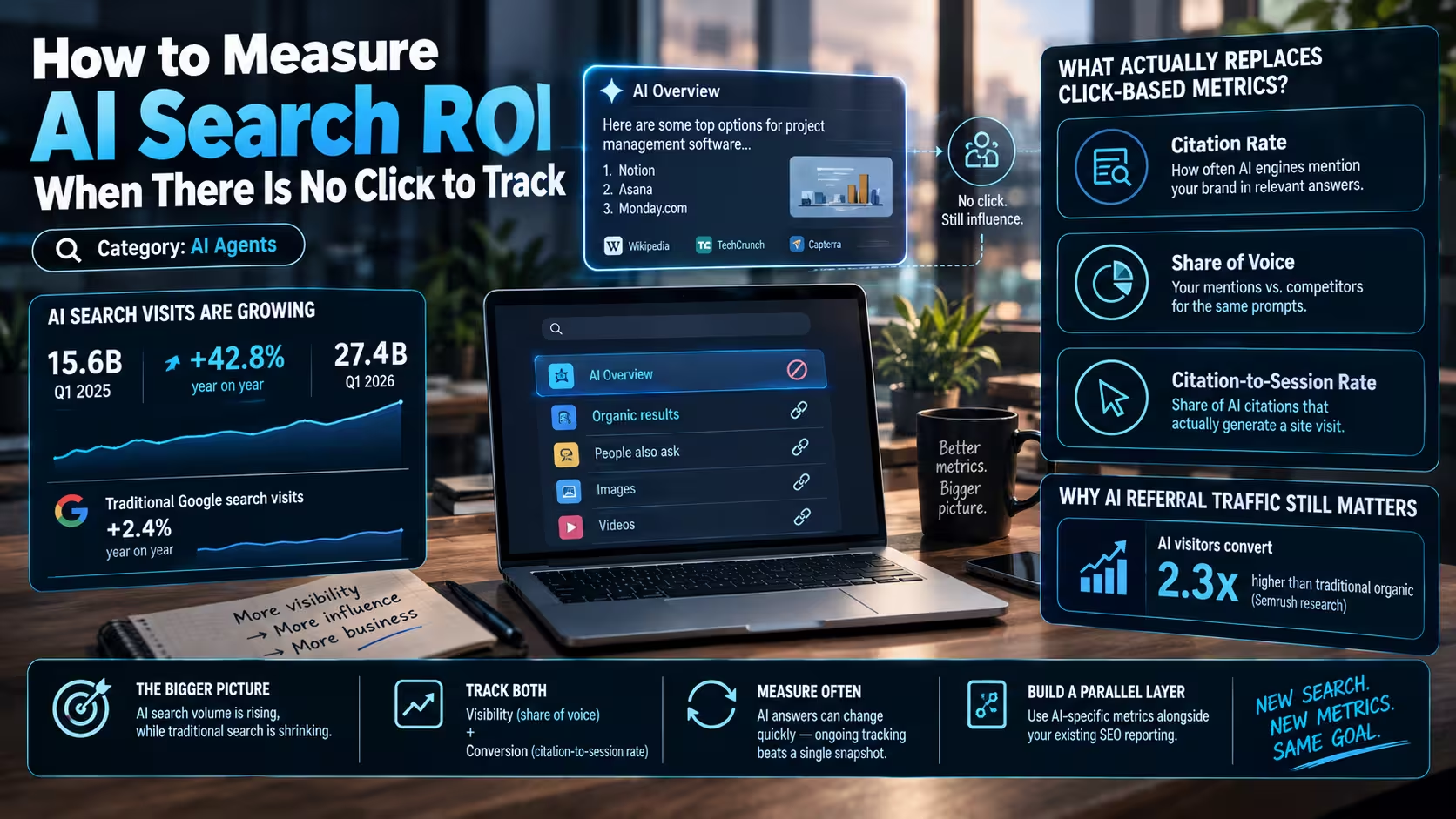
The information retrieval landscape is undergoing a seismic shift. For over two decades, Google has dominated how people discover information online. However, we are now witnessing a rapid transition from a Google-dominant world to one where AI answer engines like ChatGPT, Gemini, Perplexity and Microsoft Copilot are becoming the primary source of information for millions of users.
This shift brings with it a fundamental challenge: zero-click searches. When ChatGPT provides a comprehensive answer with citations embedded within the response, users often find exactly what they need without ever clicking through to a website. This represents both a threat and an opportunity. The threat is obvious—less direct traffic to your website. The opportunity lies in being the source that AI engines cite and recommend, establishing your brand as a trusted authority in your field.
Businesses that fail to adapt to this new reality risk becoming invisible. Traditional SEO alone is no longer sufficient. The strategies that worked brilliantly for Google rankings may not translate directly to AI visibility. This is why we’ve developed these 10 essential strategies to help you get ranked and cited in ChatGPT and other AI answer engines before your competitors do.
1. Allow AI Crawlers to Access Your Site
The foundation of AI visibility starts with accessibility. Opening your website to AI crawlers like those from OpenAI and Perplexity is absolutely essential for appearing in ChatGPT responses. Many websites inadvertently block these crawlers through their robots.txt file, effectively rendering their content invisible to AI systems.
Update your robots.txt file to explicitly permit access from AI crawlers. Add an llms.txt file to your site root containing a clear description of your site, navigation guidance, key links and summaries of your main pages. This structured approach helps large language models understand and crawl your content more effectively. For instance, Perplexity bots have been observed specifically accessing llms.txt files, leading to significantly better indexing.
If you publish video content on YouTube, enable AI training on your transcripts through your channel settings. This can substantially boost your visibility in models like Gemini. YouTube provides trusted, structured data that LLMs favour, and several case studies have demonstrated clear increases in exposure and traffic following this change.
Submit your site to Bing Webmaster Tools to ensure proper indexing, as ChatGPT relies on Bing for real-time data retrieval. Unindexed sites are highly unlikely to appear in responses. Regular audits of crawl errors, fixing JavaScript reliance issues and resolving mobile errors ensure your content remains accessible to AI bots.
2. Implement Structured Data and Schema Markup
Structured data transforms your content from human-readable text into machine-readable information. Use schema markup such as FAQPage, HowTo, Product and Review to make your content easily interpretable by AI systems. Adding JSON-LD schema helps large language models accurately understand context, relationships and the meaning behind your content.
For eCommerce sites, comprehensive schema including product details like name, price, availability and ratings builds essential trust signals that improve AI interpretation. This structured approach leads to better representation in conversational search results. Article schema for blog posts and FAQ schema for question-based content enhance AI readability considerably.
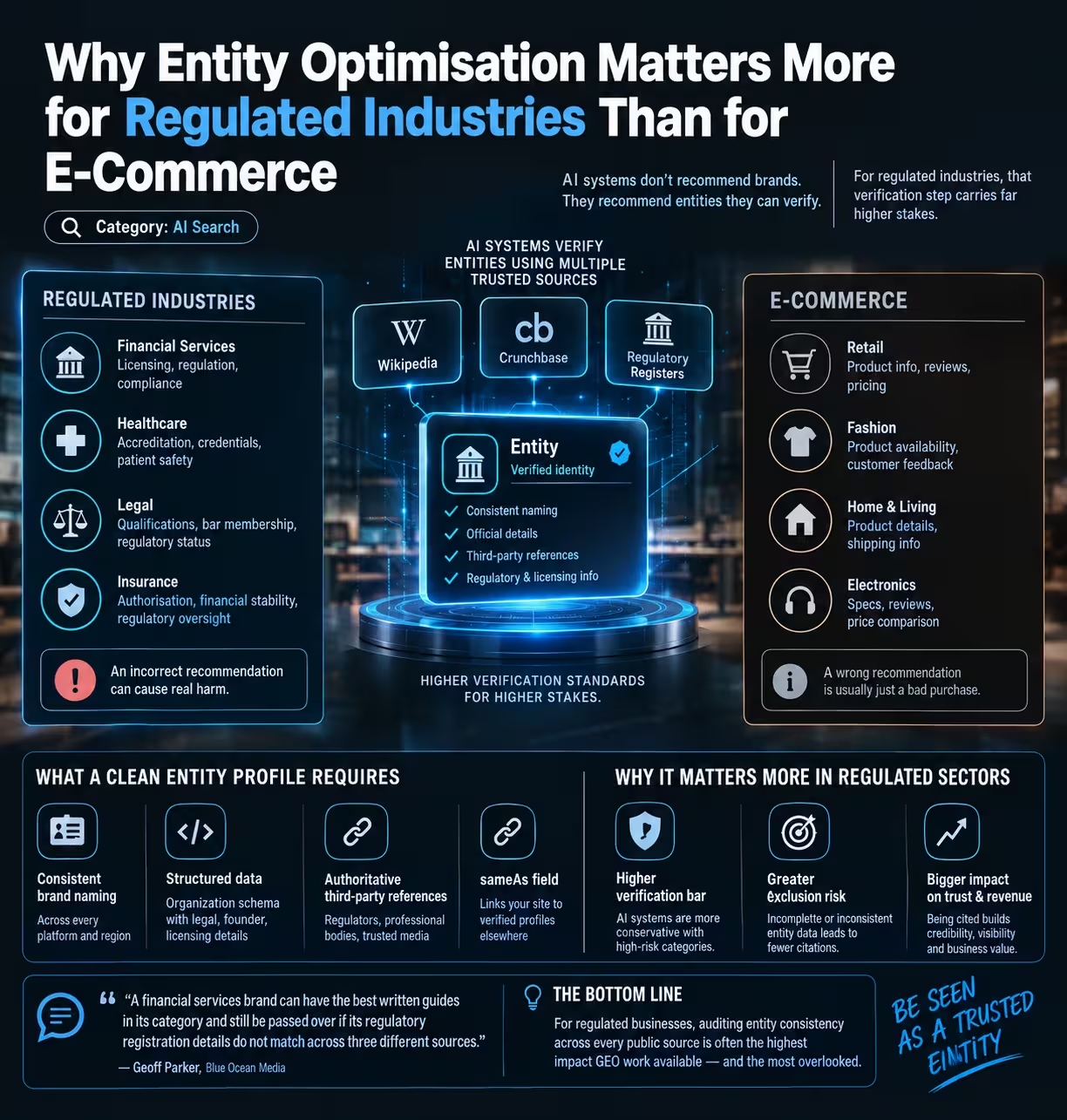
Consider Review Schema for comparison content such as ‘Best AI SEO Tools for 2026’, which aids in entity recognition. Entity-focused schema like Organization or Product helps AI systems understand relationships between different elements on your site, boosting overall credibility.
Implementing schema is a low-risk, high-reward tactic that supports both traditional SEO and AI optimisation. It provides standardised context, making your pages significantly more likely to be selected for summaries in tools like ChatGPT. Combined with strong E-E-A-T signals (Experience, Expertise, Authoritativeness, Trustworthiness), this strategy favours sites with deep, structured coverage in AI responses.
3. Create High-Quality, Citation-Worthy Content
Producing original content with proprietary research, detailed case studies and unique insights makes your material inherently appealing for ChatGPT to cite. Shallow or generic content gets ignored, whilst evidence-based material that genuinely meets user intent stands out and earns citations.
Focus relentlessly on factual accuracy with verified sources and current statistics. AI models strongly prefer unique, in-depth content that provides genuine value. Testing consistently shows ChatGPT favours novelty and originality over duplicated information that appears across multiple sources.
Companies that publish blog content consistently see approximately 55% more traffic and 126% higher lead growth compared to those that do not. Align your content creation with natural language questions that users ask ChatGPT. Balance evergreen topics that remain relevant over time with timely updates that keep your content current.
Include multimedia elements like videos, infographics and charts to increase visibility. AI models reward trustworthy, detailed guides that provide real experiences and practical insights. Avoid spam tactics and focus on genuinely solving problems. AI systems can detect low-quality behaviour, and high-quality content distributed across multiple platforms enhances your citation potential substantially.
4. Build Brand Mentions and Authority Through E-E-A-T
Boosting brand mentions across the web is critical because top-mentioned brands receive up to 10 times more visibility in AI summaries. A 2025 Ahrefs study discovered that branded mentions correlate very strongly with AI citations, showing a Spearman correlation coefficient of 0.664.
Enhance your E-E-A-T signals by adding comprehensive author biographies, citing authoritative data sources and including customer testimonials. ChatGPT demonstrably favours credible sources, and a 2024 Ahrefs study revealed that sites with strong backlink profiles rank approximately 80% higher in AI tools.
Secure mentions in authoritative publications, garner reviews on platforms like G2 or Trustpilot, and actively participate in communities such as Reddit and Quora. This builds essential trust signals. According to BrightLocal research cited by Forbes, 98% of consumers read reviews before making a purchase decision.
Engage actively on social media platforms and encourage satisfied customers to leave positive reviews. Responding to all reviews makes consumers 88% more likely to make a purchase, strengthening the brand signals that AI systems use for recognition. Utilise digital PR to secure high-tier mentions, maintain consistent NAP (Name, Address, Phone) information, sustain social media activity and contribute guest posts to help AI identify your brand as trusted and authoritative.
5. Optimise for Conversational Language and Queries
Write in natural, conversational tones that match how users actually ask questions. Queries like ‘Is this product good for daily running?’ reflect how people speak to AI assistants. This approach helps your content appear in ChatGPT answers by aligning with spoken search patterns rather than traditional keyword-based queries.
Target long-tail conversational keywords and structure your content around frequently asked questions. Provide context and practical examples within your answers, as AI thrives on question-based searches rather than broad, generic terms.
Use voice search optimisation techniques with natural phrases. Research indicates that 21% of users rely on voice search, and 52% use it specifically for product research, making conversational content absolutely key for AI visibility.
Employ semantic entities rather than just focusing on isolated keywords. Target user intent with phrases like ‘Bluetooth headphones with ANC under £100’ to improve relevance in natural language processing-driven results. Mirror AI response patterns by using short, simple sentences. Avoid overly complex language to better match ChatGPT’s output style, which enhances your chances of being selected for direct, intent-aligned answers.
6. Keep Content Fresh and Updated
Regularly audit and update your content on a quarterly basis with new statistics, emerging trends and fresh examples. Timeliness signals relevance to AI systems, and outdated data or broken links can completely exclude your content from consideration.
Combine evergreen topics with regular refreshes. For example, update pillar posts like ‘How to Start a Workout Routine at Home in 2026’ to maintain trust and boost your rankings. Semrush research demonstrates a strong correlation between fresh content and organic performance, making updates crucial for LLM SEO.
Aim for comprehensive pieces of 1,800 words or more with actionable depth. Refreshing older blog posts prevents outdated information from harming your AI citation potential. Monitor trending prompts and competitor content using tools like AnswerThePublic to identify new questions your audience is asking, ensuring your content reflects current realities and maintains relevance for AI inclusion.
7. Use Clear Content Structure and Formats
Employ clear headings (H1 through H3), short paragraphs, bullet points, numbered lists and tables to make your content easily parseable by AI systems. AI models particularly favour structured formats such as Q&As, how-to guides, step-by-step instructions and TL;DR summaries.
Include executive summaries, key takeaways and comparison tables throughout your content. This makes it exceptionally AI-ready and significantly easier for systems to extract and summarise in their responses.
Structure your writing with one main idea per paragraph and use bold formatting to highlight key points. Clear organisation helps large language models process unstructured data more effectively, reducing the likelihood of zero-click losses where users get all their answers without visiting your site.
Add dedicated FAQ sections and step-by-step guides. For eCommerce websites, use descriptive paragraphs and Q&A formats to influence search engine results pages with repeated, natural phrases. Optimise for behavioural metrics like dwell time, as formats that engage users signal trustworthiness to AI systems. Monitor these metrics using tools like Microsoft Clarity to refine your approach continually.
8. Get Featured in Listicles and ‘Best Of’ Lists
Secure placements in ‘best of’ or ‘top tools’ listicles for transactional queries. This positioning earns direct AI recommendations, as ChatGPT frequently draws from well-researched roundup articles when users ask for product or service recommendations.
Use targeted outreach to secure mentions in relevant listicles. These placements are particularly powerful for AI SEO, significantly boosting what Ahrefs terms ‘Second Hand Search Traffic’—visibility you gain from being mentioned in content that AI systems cite.
Appear in user-generated content on Reddit and Quora, which Semrush research identifies as amongst the top-cited domains in AI Overviews. Positive community mentions build your profile organically without requiring constant manual effort.
Engage authentically on Reddit through AMAs (Ask Me Anything sessions) and genuinely helpful posts. With 416.4 million weekly users, Reddit represents a significant opportunity for brand building that feeds directly into large language model training. Build relationships with industry experts for inclusion in expert roundups and affiliate recommendation lists, enhancing your authority signals across web communities that AI systems monitor.
9. Build Topical Authority with Content Clusters
Create comprehensive pillar pages with extensively interlinked supporting articles on your core topics. This demonstrates subject matter expertise, substantially increasing your likelihood of being summarised in ChatGPT answers.
Cluster related content around central themes with robust internal linking. AI systems strongly prefer deep topical coverage, rewarding websites with grouped, entity-rich content that demonstrates genuine expertise in specific subject areas.
Publish in-depth guides and detailed tutorials. For eCommerce businesses, link these resources to relevant product pages, building authority through consistent publishing across multiple platforms and content types.
Focus on semantic SEO by using natural language throughout your content clusters. Topical groupings help with entity recognition, allowing AI systems to distinguish between different contexts such as brand names versus product types. Update your content clusters regularly, as this strategy aligns perfectly with ChatGPT’s documented preference for comprehensive, interconnected content over isolated, standalone pieces.
10. Monitor and Track Performance
Track brand mentions using tools like Brand24. Brands in the top quartile of mentions yield approximately 10 times more AI citations, and monitoring allows you to refine your strategy based on sentiment analysis and performance data.
Conduct regular query testing by searching for your target topics in ChatGPT and analysing which sites get cited. Monitor key metrics including citation frequency, context quality and conversions from AI traffic sources to understand which content performs best.
Use UTM codes and analytics tracking for AI-driven traffic. Monitor high-quality referrals to optimise the content that drives meaningful business outcomes rather than just vanity metrics.
Test with specific prompts like ‘Best PPC agency’ and analyse gaps in AI answers to identify content opportunities. Optimise load times and behavioural metrics, as research shows a one-second delay in page loading reduces user satisfaction by 16%. Monitor these trust signals using Microsoft Clarity to maintain the technical performance that AI systems factor into their citation decisions.
The Time to Act Is Now
The shift from traditional search to AI-powered answer engines is not a future possibility—it is happening right now. Businesses that delay adapting their digital strategy will find themselves increasingly invisible as potential customers turn to ChatGPT, Gemini and other AI platforms for recommendations and information.
These 10 strategies represent the foundation of effective AI visibility, but implementation requires expertise, consistent effort and ongoing optimisation. The competitive advantage belongs to those who act decisively rather than those who wait to see how things develop.
At Blue Ocean Media, we understand that navigating this transition can feel overwhelming. That is precisely why we offer a free AI answer engine audit for businesses ready to take action. Our team will analyse your current visibility across major AI platforms, identify specific opportunities for improvement and provide a clear roadmap for enhancing your AI citations.
The question is not whether AI search will reshape your industry—it already is. The question is whether you will be amongst the businesses that thrive in this new landscape or amongst those left behind. Contact us today to schedule your free AI answer engine audit and position your business for success in the age of AI search.