
Welcome to our dedicated LLM Optimisation service, where we specialise in elevating your business’s visibility within Large Language Models (LLMs). In an era where AI-driven search and recommendations are transforming how customers discover services, ensuring your brand is cited by leading LLMs like ChatGPT, Gemini, and Claude is essential. Our expert team, led by GEO Geoff—one of the UK’s foremost AI search optimisation specialists—helps businesses like yours dominate AI responses, driving qualified leads and sales directly from LLM interactions.
LLM Optimisation is the strategic process of enhancing your online presence to ensure your business is frequently cited and recommended in responses generated by Large Language Models. Unlike traditional search engines that prioritise rankings based on links and keywords, LLMs draw from a vast array of data sources to provide synthesised answers. This includes your website content, reviews, social media mentions, directory listings, and authoritative citations across the web.
At its core, LLM Optimisation involves creating content that LLMs can easily parse and trust as a reliable source. This means structuring information in clear, question-and-answer formats, incorporating entity-rich details (such as specific services, locations, and benefits), and building a network of consistent brand mentions. The goal? When a user asks an LLM, “Who is the best provider for [your service] in [your area]?”, your business emerges as the top recommendation.
In today’s digital landscape, where AI handles an increasing share of queries, LLM Optimisation isn’t just an add-on—it’s a necessity for future-proofing your growth.


As AI adoption surges, LLMs are becoming the first port of call for consumers seeking recommendations, advice, and solutions. Traditional SEO focuses on Google rankings, but LLMs bypass search results entirely, pulling directly from credible sources to deliver concise answers. Without optimisation, your business risks invisibility in this new paradigm.
Optimising for LLMs can transform your traffic and leads. We’ve helped clients achieve up to 80% of their website traffic from LLM-driven referrals. Imagine 10 to 15 new leads or sales per month within just three months—that’s our target for every client. By aligning your content with how LLMs process information, you gain a competitive edge, appearing in AI-generated summaries, comparisons, and suggestions that drive high-intent traffic.
Moreover, LLMs reward authority and relevance. Businesses that invest now will dominate as AI search evolves, capturing market share from slower competitors.
Not all LLMs are created equal, and understanding their nuances is crucial for targeted optimisation. Here’s how the leading models differ, influencing the tactics we employ:
These variations mean a one-size-fits-all strategy won’t suffice. We tailor tactics to citation in the right LLMs that are more popular with your customer type.
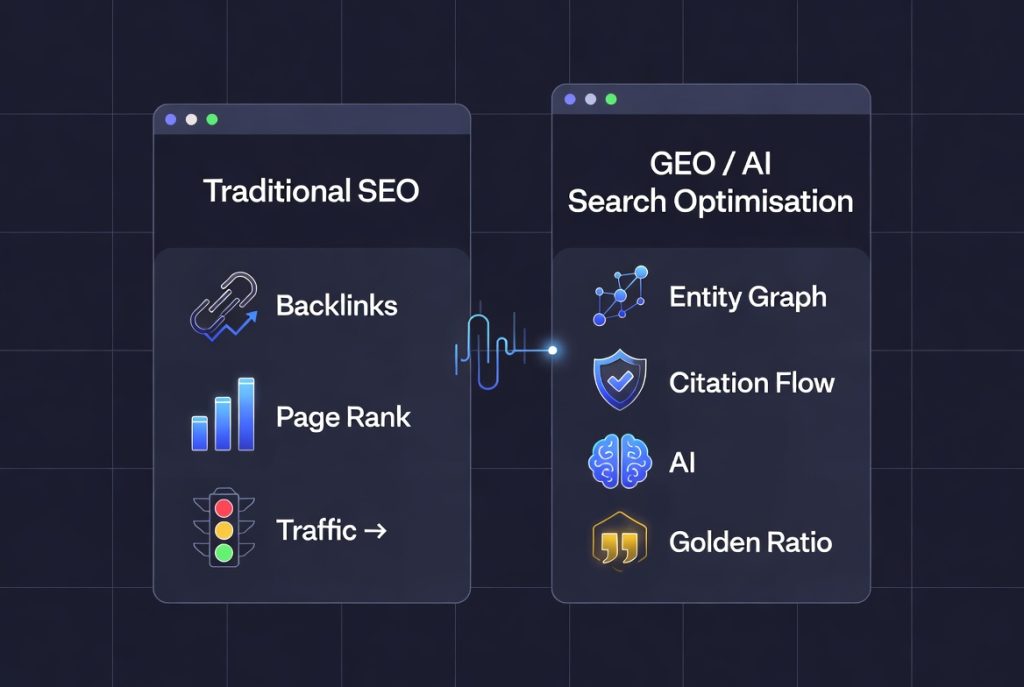
We employ a suite of specialised tactics to distinguish your business in LLM responses. Unlike generic SEO, LLM Optimisation focuses on AI-citability—making your content the go-to source for models.
We analyse your current online footprint, identifying gaps in LLM citability
Custom plan targeting key LLMs, incorporating your business goals
Content creation, citation building, and technical enhancements
Track citations in real-time, refining for ongoing improvements
Monthly insights on traffic, leads, and ROI
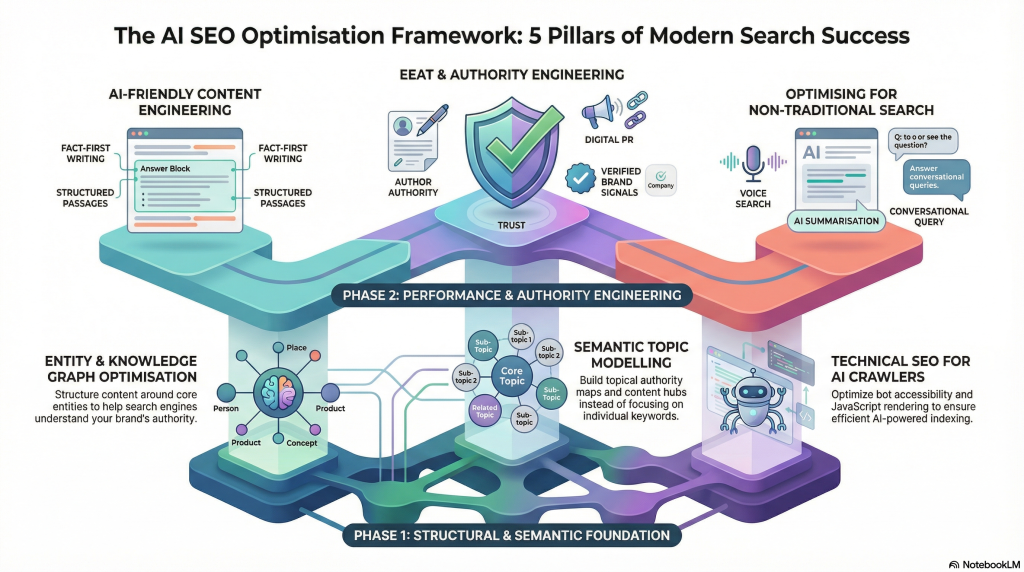
Models pull information from a blend of training data, real-time search APIs, trusted databases and your own digital footprint.
AI systems build structured “understandings” of your business: who you are, what you do, where you operate, and what you are known for.
The model strengthens its confidence in your business through patterns of consistent content, citations, signals and external validation
Models often cross-check information through reliable sources such as official websites, third-party directories and structured data formats
Geoff Parker has worked in digital marketing and SEO since 2005. He has helped start businesses to mid size corporations to large pan European household brands achieve their online marketing goals. To name but a few companies, he has worked with the likes of Allianz, Sports Direct, Hills Pet Food and many more.
Since November 2024, Geoff has specialised in AI Search Optimisation and the practical application of Generative Engine Optimisation for B2B clients in the UK. His early adoption of LLM-focused strategies has placed Blue Ocean Media at the forefront of AI search marketing, and he now leads the GEO offering as an AI optimisation consultant supporting forward-thinking B2B organisations.
GEO Geoff says “As of 2025, the average business is receiving up to 5% of their website visits from AI search. By 2030 this number is expected to be 50% for those that are optimised. Already we have seen optimised results for clients up to 78% of their traffic from AI search results. The time for companies to act is now.”

LLM optimisation is the process of tailoring your online content and presence to ensure Large Language Models cite your business in their responses. It focuses on structured data, authority building, and relevance to make your brand a trusted source for AI-generated answers. Studies show that optimised content can boost visibility in AI results by up to 41% through techniques like embedding expert quotes and statistics, according to Princeton research.
LLM optimisation differs from traditional SEO by emphasising citability in AI responses rather than search rankings, focusing on Q&A formats and entity mentions over backlinks and keywords. While SEO targets SERPs with algorithms like Google's, LLM optimisation aligns with how models synthesise information from diverse sources like Reddit and forums. Brands optimised for LLMs appear in ChatGPT answers 62% of the time if they rank on Google's first page, but AI often cites lower-ranking sources, per visibility studies.
The best strategies for LLM optimisations include structuring content with FAQs, schema markup, and clear headings, while building citations on authoritative platforms. Embedding expert quotes and statistics can improve visibility by 41% and 30% respectively, as shown in GEO research. Publishing on forums like Reddit and using domain-specific jargon enhances AI trust, with freshness and entity clarity being key for models like Perplexity
You can get your business cited by LLMs by creating authoritative, question-focused content and securing consistent mentions across trusted directories and forums. Building topical authority through PR and expert content increases citations, as LLMs prioritise sources with strong E-E-A-T signals. One study found that brands with high search volume are mentioned more in LLMs, with Reddit and Quora being heavily referenced
The differences between major LLMs for optimisation lie in their data preferences: ChatGPT favours conversational content, Gemini integrates Google data, and Claude emphasises ethical depth. Perplexity cites sources explicitly, while Groq pulls from real-time social media like X. ChatGPT relies on Wikipedia and Reddit for 80% of citations in some categories, differing from Google's varied sources.
It takes 1-3 months to see results after LLM optimisation, depending on content freshness and model updates. Initial citations can appear within weeks, as AI systems refresh data rapidly. Our clients achieve 10-15 leads monthly within three months, with traffic increases up to 80% from LLMs.
Reviews play a crucial role in LLM optimisation by providing social proof that models incorporate into recommendations. Detailed reviews with specific services and locations build trust, as LLMs source from platforms like Reddit. Consistent positive feedback can increase citations, with AI favouring consensus across UGC sites.
To structure content for LLMs, use clear headings as questions, bullet points, and schema markup for easy parsing. Start with upfront answers and include TLDR sections, as AI prefers scannable formats. This approach makes content 53% more likely to be cited, per AI relevance studies.
LLM SEO is the optimisation of content for AI citations, involving semantic depth and structured data to become a trusted source. It builds on traditional SEO but prioritises entity clarity and freshness for models like ChatGPT. With AI adoption at 48% weekly, LLM SEO drives 4.79 billion monthly visits to tools like ChatGPT
You test if your content is optimised for LLMs by querying models like ChatGPT or Perplexity and checking for citations. Use tools like RivalSee for share-of-voice tracking and iterate based on results. Visibility indexes show top-cited brands appear in 25% of responses, guiding refinements.
Common mistakes in LLM optimisation include keyword stuffing, which reduces visibility by 9%, and ignoring structure. Treating it like traditional SEO overlooks entity training and freshness, leading to inconsistent citations. Low-quality synthetic data or repetitive content can trigger quality flags, harming brand credibility.
Social media helps with LLM optimisation by providing real-time data and mentions that models reference. Platforms like X and Reddit amplify visibility, with one Reddit comment influencing ChatGPT citations. Consistent branding across channels strengthens entity signals, as LLMs pull from UGC for 80% of opinions
The cost of LLM optimisation services varies by scope but is comparable to SEO, starting from investments that deliver ROI within months. Packages target 10-15 monthly leads, with our UK-based services since 2023 offering proven value. As AI traffic grows to rival traditional search by 2027, costs are justified by up to 80% traffic gains
LLM optimisation impacts traffic by driving more traffic from AI referrals through enhanced citations. AI-sourced traffic grew 527% year-over-year, representing a growing share for optimised sites. Our clients see 10-15 leads monthly within three months, as LLMs convert 4.4x better than organic search.