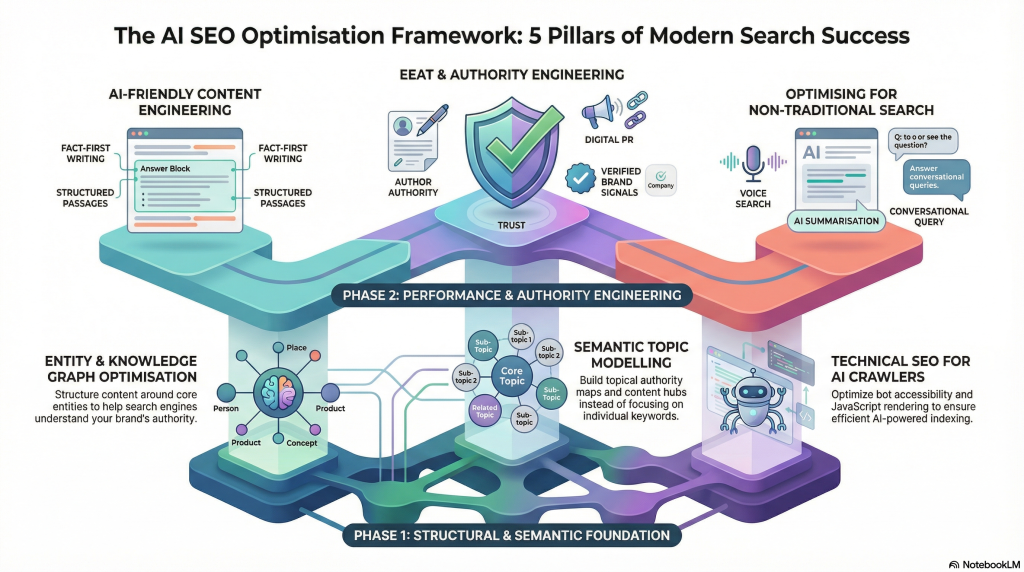

In today’s digital landscape, businesses are increasingly relying on AI answer engines like ChatGPT to engage with customers, generate content, and provide instant answers. Google’s share of the search market has dropped below 90% for the first time in years, and LLMs such as ChatGPT are a major driving force behind this.
Our ChatGPT optimisation service specialises in helping UK businesses get their content cited by ChatGPT when users ask relevant questions. This drives qualified referral traffic back to your site, boosting enquiries, leads, and sales.
Unlike general LLM optimisation or broader AI SEO (covered on our other dedicated pages), this service focuses exclusively on strategies to make your brand and content more visible and preferable in ChatGPT’s generated responses. By appearing as a trusted, authoritative source in AI answers, you capture high-intent users at the moment they seek solutions—often leading to higher conversion rates than traditional search traffic.
ChatGPT optimisation—also known as Generative Engine Optimisation (GEO) tailored for ChatGPT—involves refining your website content, social media posts, and overall online presence so that ChatGPT is more likely to cite, quote, or recommend your brand in its answers.
When a user asks ChatGPT something like “What’s the best [product/service] for [specific need] in the UK?”, the model draws from its knowledge and real-time retrieval to generate a response. Our service optimises your content to increase the chances of inclusion, often with direct links that send traffic your way. This isn’t about optimising how you use ChatGPT (e.g., prompt engineering or API efficiency)—it’s about making your business the one ChatGPT chooses to reference, turning AI conversations into real website visits and revenue.


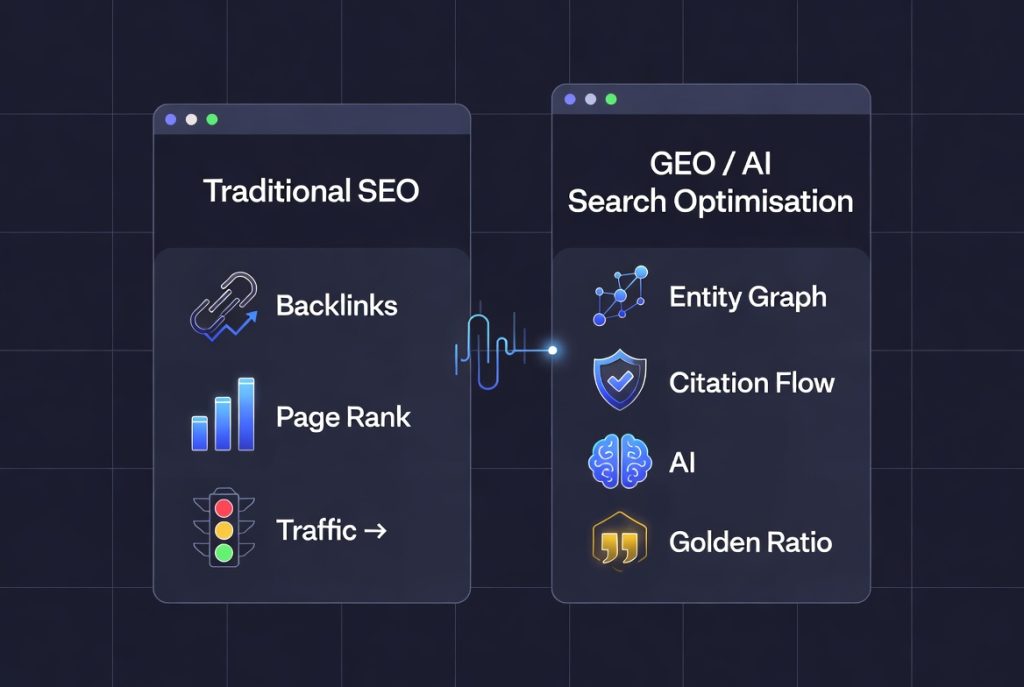
Traditional SEO targets Google and other search engines to rank higher in blue-link results, focusing on keywords, backlinks, technical factors, and user experience metrics to attract clicks from search engine results pages.
ChatGPT optimisation operates differently: ChatGPT doesn’t display ranked lists—it synthesises answers from trusted sources, often summarising or paraphrasing them with citations. Success here relies on:
While strong traditional SEO helps (as ChatGPT often pulls from web searches via Bing), GEO for ChatGPT requires additional tactics like conversational phrasing, unique insights, and multi-source authority building. Our service complements your existing SEO without duplicating efforts.
Optimising specifically for ChatGPT remains the smartest priority in 2026.
ChatGPT still dominates the generative AI market with a 68% share. Other AI answer engines are well behind with Perplexity at 10%, Gemini at 4%, and Copilot at 3%.
This leadership is driven by massive adoption and first mover advantage, with ChatGPT boasting around 800 million weekly active users according to multiple 2025-2026 reports from OpenAI, DemandSage, and Exploding Topics. Its balanced citation style—typically drawing from 5 sources per response—favours authoritative, structured content sourced via Bing, making targeted GEO tactics highly effective for increasing visibility and high-intent referral traffic.
While Gemini grows rapidly and Grok offers real-time social integration, their smaller shares limit broader commercial impact, so focusing on ChatGPT first delivers the highest ROI as AI-driven discovery expands.
Partnering with us delivers measurable gains:
Clients see improved visibility in AI answers, with some reporting noticeable upticks in organic referrals from ChatGPT.
We provide this for free. Test your current citations in ChatGPT for key queries and identify gaps.
Develop GEO-focused plans, including prompt research and competitor analysis.
Enhance structure, add statistics, unique data, FAQs, and schema for AI readability.
Boost signals through backlinks, mentions, reviews, and Bing optimisation.
Widespread, authentic engagement on Reddit, X, and LinkedIn boost social media sentiment and signals for LLMs.
Models pull information from a blend of training data, real-time search APIs, trusted databases and your own digital footprint.
AI systems build structured “understandings” of your business: who you are, what you do, where you operate, and what you are known for.
The model strengthens its confidence in your business through patterns of consistent content, citations, signals and external validation
Models often cross-check information through reliable sources such as official websites, third-party directories and structured data formats
Geoff Parker has worked in digital marketing and SEO since 2005. He has helped start businesses to mid size corporations to large pan European household brands achieve their online marketing goals. To name but a few companies, he has worked with the likes of Allianz, Sports Direct, Hills Pet Food and many more.
Since November 2024, Geoff has specialised in AI Search Optimisation and the practical application of Generative Engine Optimisation for B2B clients in the UK. His early adoption of LLM-focused strategies has placed Blue Ocean Media at the forefront of AI search marketing, and he now leads the GEO offering as an AI optimisation consultant supporting forward-thinking B2B organisations.
GEO Geoff says “As of 2025, the average business is receiving up to 5% of their website visits from AI search. By 2030 this number is expected to be 50% for those that are optimised. Already we have seen optimised results for clients up to 78% of their traffic from AI search results. The time for companies to act is now.”

ChatGPT optimisation is the process of structuring your website and social media content so that ChatGPT is more likely to cite, quote, or recommend it in answers to user queries. This drives high-intent referral traffic back to your site, increasing enquiries and sales. Unlike traditional SEO, it focuses on making content AI-friendly through clear structure, statistics, and authority signals that align with ChatGPT's citation preferences.
ChatGPT optimisation involves creating authoritative, well-structured content with statistics, unique insights, and strong E-E-A-T signals while optimising for Bing as ChatGPT's primary real-time search source. Techniques like adding data-rich comparisons and standalone quotable sentences can significantly boost citation rates. Studies show pages with 5+ statistics get cited up to 3x more frequently in AI responses.
Traditional SEO helps with ChatGPT citations because strong Google and Bing rankings improve visibility in sources ChatGPT draws from. However, additional GEO tactics like conversational phrasing and citation-friendly formats are needed for optimal results. Many cited pages also rank well organically, with correlations showing up to 85% overlap in some analyses.
ChatGPT can send meaningful referral traffic to optimised sites from high-intent queries, and in some cases we have delivered up to 80% of all website traffic from ChatGPT. Referral traffic from ChatGPT increased 52% year-over-year in late 2025 periods, with optimised brands reporting noticeable upticks in qualified visitors. As AI usage expands, early optimisers capture valuable leads before broader shifts occur.
ChatGPT optimisation is a focused form of Generative Engine Optimisation (GEO) specifically tailored to OpenAI's model and its citation behaviours. GEO broadly applies to AI engines, but ChatGPT-specific strategies emphasise Bing synergy, factual depth, and structured content.
Your site may not appear in ChatGPT answers due to insufficient authority, poor structure for AI parsing, or limited visibility in Bing-indexed sources. Common issues include lack of statistics, buried insights, or outdated content that reduces trustworthiness. Adding schema markup and refreshing pages can dramatically improve citation chances.
Content types that work best are comparisons, buyer guides, case studies, FAQs, and data-rich articles perform best for ChatGPT optimisation because they directly answer user questions in a quotable format. Content with clear headings, bullet points, and statistics is easier for ChatGPT to extract and cite.
Yes, you should optimise for bing as part of a structured ChatGPT optimisation strategy.
Bing optimisation is essential for ChatGPT citations since ChatGPT relies heavily on Bing for real-time web data and retrieval. Strong Bing visibility through structured content and authority signals directly increases the likelihood of inclusion. This synergy forms a foundational part of effective ChatGPT strategies.
To track ChatGPT citations by regularly testing key queries in the tool, monitoring referral sources in analytics, and using AI visibility tools like Semrush's toolkit. Manual checks or automated monitoring reveal citation frequency and traffic impact. Consistent testing over weeks shows improvements from optimisations.
Schema markup, particularly FAQ, HowTo, and Article types, helps ChatGPT by making content easier to extract and cite accurately. It improves AI readability and boosts visibility in structured responses. Certain schema implementations can increase citation rates by up to 1.7x for instructional queries.
Social media content can get cited by ChatGPT if it generates authentic engagement and mentions on platforms like Reddit, X, or LinkedIn. Widespread discussions build authority signals that influence the model's trustworthiness assessment. Genuine conversations often indirectly enhance citation frequency in relevant answers.
ChatGPT optimisation differs from Google AI Overviews by prioritising Bing-sourced data, Wikipedia-style structure, and balanced citations over Google's heavier reliance on Reddit and diverse sources. ChatGPT favours factual, neutral summaries with around 5 citations per response. Tailoring to these patterns ensures better performance in conversational AI.
The best practices to increase ChatGPT mentions include incorporating statistics (boosting visibility by up to 37%), citing sources, using unique angles, and ensuring factual, comprehensive content. Standalone quotable sentences and credentialed authors further enhance chances. Pages applying multiple tactics see citation rates rise from 12% to 47% on average.
Yes, optimising for ChatGPT in 2026 is highly worthwhile as AI search grows and early adopters gain competitive edges in referrals and brand awareness. With ChatGPT driving the majority of AI referral traffic, targeted GEO delivers strong ROI. Projections indicate generative engines could influence up to 40% of discoveries soon.
Results from ChatGPT optimisation typically appear in 4–12 weeks after content updates, authority building, and monitoring. Citation improvements depend on query volume and implementation depth. Many see noticeable increases in mentions and traffic within the first month of refinements.
ChatGPT increasingly cites Reddit due to its authentic discussions and real-user insights, with Reddit citations rising 87% in mid-2025 periods to over 10% of total shares. Building genuine presence there can indirectly boost visibility. Reddit now ranks among top sources alongside Wikipedia.
Backlinks play a significant role in ChatGPT optimisation by building domain authority and trustworthiness, which help AI models like ChatGPT identify reliable sources for citations in responses. Sites with quality backlinks from trustworthy domains are more likely to rank higher in underlying search engines like Bing, indirectly boosting their visibility and citation rates in generative AI outputs. Research from 2025-2026 indicates that backlinks remain a top factor for SEO foundations in GEO, with correlations showing higher link profiles leading to increased organic traffic and AI references