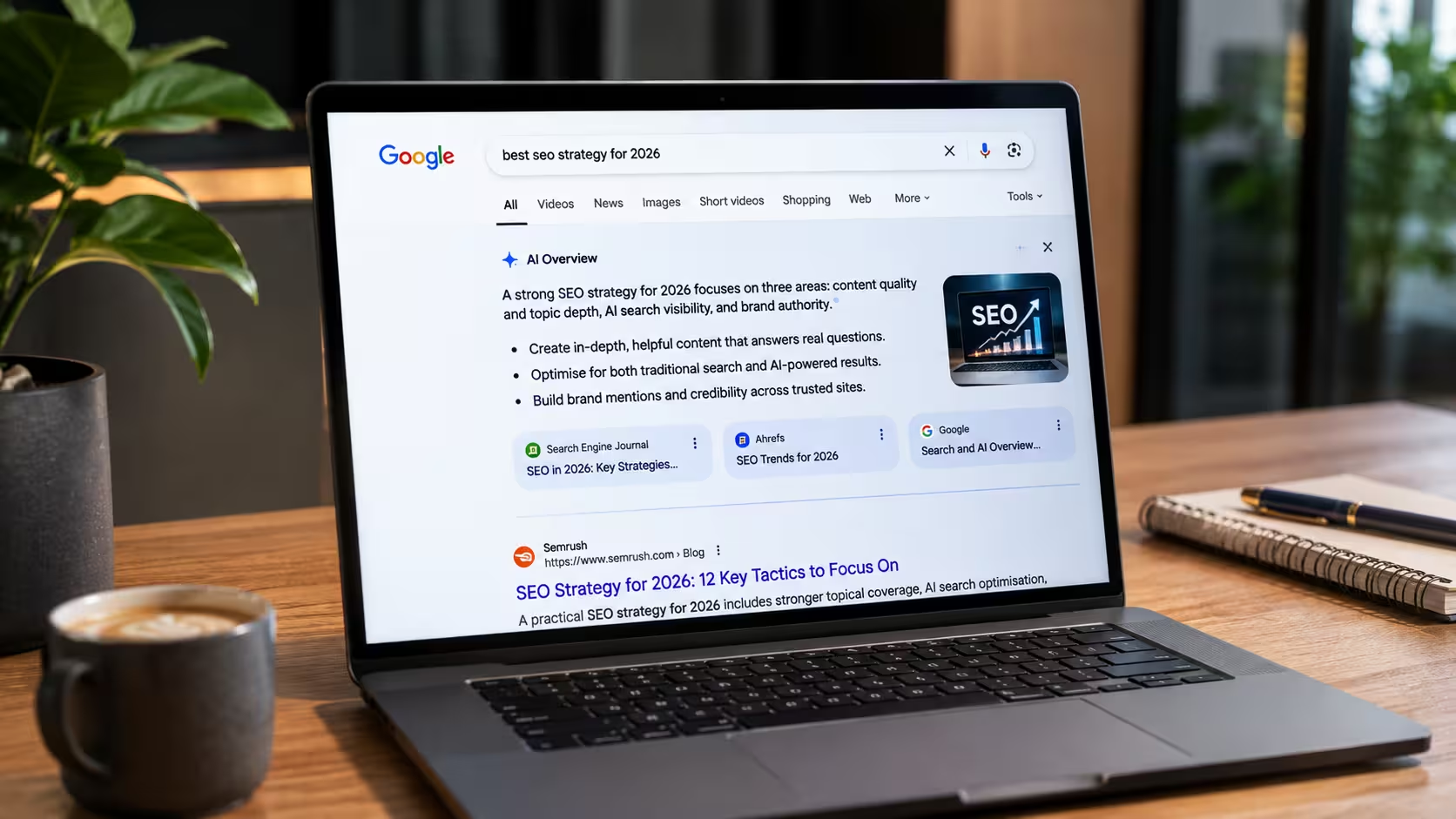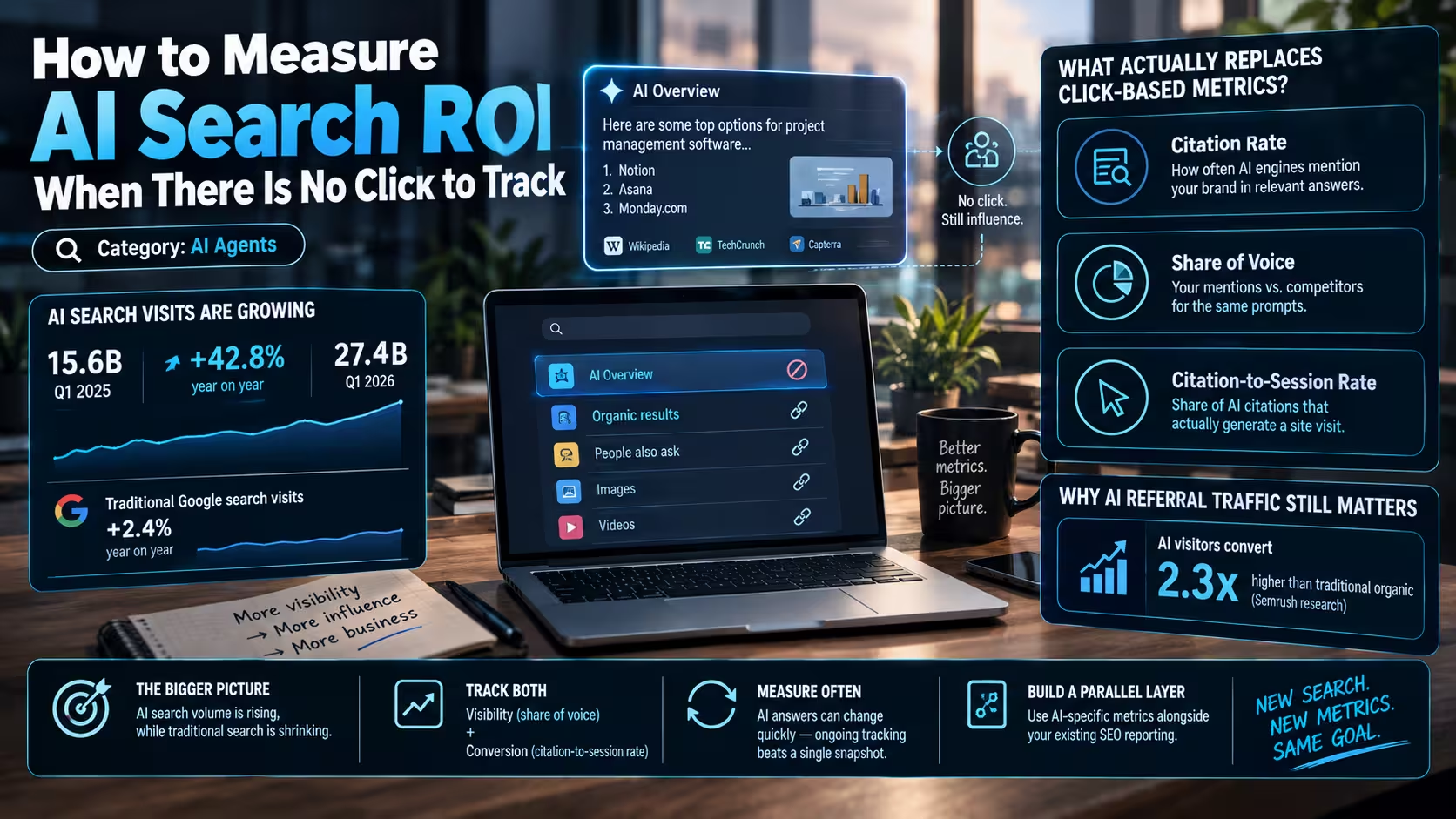

Search no longer ends on a page of ten blue links. At Google I/O in May 2026, Google said AI Overviews had reached 2.5 billion monthly users and AI Mode had passed 1 billion (Digital Applied, May 2026). For businesses that already pay for SEO, the obvious worry is that showing up in AI answers will need a second budget on top of the first.
Can You Do Both on Your Current Budget?
Yes, in most cases you can do both AI SEO and traditional SEO on your current budget, provided you rebalance how it is spent rather than simply adding to it. AI SEO, often called generative engine optimisation, is the practice of making a brand and its content more likely to be cited in AI generated answers from tools such as ChatGPT, Gemini, Perplexity and Google’s AI Overviews.
How Much of the Work Overlaps?
A large share of the work overlaps. AI systems still need to find, crawl and understand your pages, so technical health, fast and accessible pages, clear site structure and structured data serve both. So does content that answers real questions directly, with clear headings and statements that can be quoted on their own.
Ranking still helps too. In Ahrefs’ 2025 analysis, three quarters of the pages cited in AI Overviews also ranked in Google’s top 10 for the same query (Ahrefs, July 2025). A business with strong SEO is not starting from zero.
Where Do AI SEO and SEO Pull Apart?
AI SEO and SEO pull apart on what earns visibility beyond the website itself. Ahrefs’ updated study of 863,000 keywords found that only 38% of AI Overview citations now come from pages ranking in Google’s top 10, down from 76% less than a year earlier, while 31% come from pages outside the top 100 altogether (Ahrefs, March 2026).
Off site signals explain much of the gap. Ahrefs’ research across 75,000 brands found that branded web mentions correlated far more strongly with AI Overview visibility than backlinks did (Ahrefs, 2025).
That points to three areas where AI SEO needs specific attention, which are brand mentions on credible third party sites, content clusters that answer the many related questions AI tools generate behind the scenes, and monitoring whether your brand is actually being cited.
What Should You Spend Less On?
To fund AI SEO without increasing the budget, most businesses can spend less on activities with falling returns. Large volumes of low value links, thin pages written to target individual keywords and rank tracking for terms that now trigger AI answers are the usual candidates. Reallocating that spend towards digital PR, deeper topic coverage and AI visibility tracking typically supports both channels at once.
There is a trade off. Results in AI search are harder to measure than rankings, so some of the budget needs to go on tracking before the return can be proven.
What Is the Current Sentiment Online Regarding AI SEO Budgets?
The current sentiment among marketers online is that AI SEO is an evolution of SEO rather than a separate discipline, although opinion is divided on how fast to move budget. Some argue that ranking is becoming irrelevant, while others point out that it still underpins a large share of AI citations. Most agree that measurement is the weakest link.
Only 38% of AI Overview Citations Come From Google’s Top 10
That single figure shows why SEO alone is no longer enough, and why AI search does not mean starting again (Ahrefs, March 2026).
“Most businesses don’t need a second budget for AI search. They need to stop spending on the parts of SEO that have stopped working and move that money into brand visibility, deeper content and proper tracking,” said Geoff Parker, Managing Director of Blue Ocean Media. “Done properly, the same investment improves rankings and AI citations together” (Geoff Parker, Blue Ocean Media, Sept 2026).
If you are already paying for SEO, now is the time to review where that budget goes, before competitors start appearing in the AI answers your customers are reading. Ask your agency which activities still earn results, and consider bringing AI search optimisation into the same plan rather than treating it as an extra.