
When Government AI Goes Viral
In January 2026, a purple-haired goth character named Amelia became one of the most unexpected viral phenomena in British digital culture. What began as a cautionary figure in a government-funded educational game transformed into a cultural lightning rod that dominated social media, spawned thousands of memes, and ultimately forced the withdrawal of the entire programme. For businesses exploring AI-driven content strategies, particularly those in London and across the UK, Amelia’s story offers profound lessons about virality, audience engagement, and the unpredictable nature of digital content.
Amelia originated from Pathways, a UK government-funded educational visual novel developed by Shout Out UK to teach youth about extremism and radicalisation. The character was designed as a relatable antagonist within an interactive game aimed at 13 to 18 year olds. With her distinctive purple hair, pink dress, and goth aesthetic, Amelia was meant to represent views on immigration and cultural identity that the game portrayed negatively, teaching young people to recognise and resist radicalisation.
The Great Backfire: How Amelia Became an Icon
The irony is almost Shakespearean. Internet users on platforms like X subverted her into a viral meme and icon, symbolising resistance to perceived government overreach, turning the government’s own creation against its intended purpose. By mid January 2026, the backlash has become so significant that the game was disabled, with various reports suggesting it had amplified the very perspectives it sought to counter.
For businesses working with AI-generated content, this presents a fascinating paradox. On one hand, Amelia’s memes achieved extraordinary visibility across search engines and social media platforms, with individual posts garnering tens of thousands of likes and hundreds of thousands of views. On the other, the complete loss of narrative control demonstrates the risks inherent in AI-powered public communications.
Why This Matters for UK Businesses
As companies throughout the UK consider integrating AI avatars, chatbots, and synthetic content into their marketing strategies, understanding both sides of this equation is important. The Amelia phenomenon raises critical questions. How can businesses harness the viral potential of AI-generated characters whilst maintaining brand integrity? What safeguards prevent content from being reinterpreted in ways that undermine corporate objectives?
As of late January 2026, Amelia continues to evolve through user-generated content, with AI tools being used to create videos, artwork, and narratives featuring the character. Her persistence demonstrates something crucial for businesses to understand: once content enters the digital ecosystem, it takes on a life beyond its creators’ control, in the same way that decentralised organisations garnered adoption for their crypto currencies in the boom of 2021. The challenge lies not in preventing this transformation, which may be impossible, but in designing AI strategies that account for it from the outset.
The Origins: A Government’s Well-Intentioned Mistake
To understand the full scope of what happened with Amelia, we need to examine the timeline and mechanics of her transformation from government tool to internet phenomenon. The Pathways game was created by Hull City Council as part of an online educational project, treating media literacy and awareness of online radicalisation. The initiative was funded through Prevent, the Home Office’s counter-terrorism programme, and represented a significant investment in what authorities believed would be proactive intervention against extremism amongst young people.
Within the game’s narrative structure, players assumed the role of Charlie, a character beginning university who wanted to make friends and navigate social situations. Early in the story, they meet Amelia, introduced as a classmate involved in political activism linked to right-wing movements. The game presented various scenarios where choosing to engage with Amelia’s perspectives on immigration, cultural cohesion, and national identity led to negative outcomes, including referrals to the Prevent programme itself.
The Fatal Design Flaw
The character design proved to be a critical miscalculation. They turned Amelia into an archetype that is widely popular in global meme culture among young people: the goth girl. Rather than appearing threatening or concerning, her aesthetic resonated with internet culture’s existing appreciation for alternative styles and anti-establishment attitudes.
The transformation began in earnest during the second week of January 2026. On January 10th, 2026, a Redditor made a post to the /r/KotakuInAction subreddit describing and criticising the game, which garnered significant attention. One highly upvoted comment captured the essence of what would follow, questioning whether the creators understood how the internet works by making an attractive goth character represent the views they wished to discourage.
The AI-Powered Creative Explosion
What happened next demonstrates the speed at which AI tools can amplify cultural moments. Users across platforms began creating their own Amelia content using AI image generators, video tools, and character simulation software. Instantly iconic, Amelia prompted an explosion of AI-generated creativity, depicted as seductress, anime radical, Arthurian Lady of the Lake, and even the subject of a poignant mini-story alongside Charlie, beginning with a romance forged in anti-migrant activism and ending with marriage and kids.
The scope of this creative reinterpretation was remarkable. Within days, X communities dedicated to Amelia emerged, AI character bots were created allowing users to interact with her, and fan art flooded social media. One particularly viral post from 12th Jan 2026 shows Amelia asking Charlie to help secure certain political outcomes which gained over 19,000 likes in a single day.
Government Shutdown and Media Frenzy
The government’s response was swift but arguably too late. On 14th Jan, a user posted a screenshot of the Pathways game stuck on an infinite load screen, noting they had disabled the Amelia game, receiving thousands of likes. The game had been withdrawn or made inaccessible, though this did nothing to stem Amelia’s continued proliferation across digital platforms.
The media coverage that followed was extensive. The Guardian described her as an AI-generated British schoolgirl who is a far-right social media star, breaking out of niche silos. YouTube videos analysing her transformation garnered thousands of views, and prominent social media figures shared Amelia-related content with their substantial followings.
Amelia’s Persistent Digital Afterlife
By late January 2026, Amelia has transcended her original context entirely. She existed not as the government’s cautionary character but as a user-created symbol continuously reimagined through AI tools. Posts featuring her continued to receive thousands of engagements, demonstrating sustained interest rather than a brief viral moment.
For businesses observing this phenomenon, several patterns emerge. First, the speed of transformation was extraordinary, measured in days rather than weeks or months. Second, AI tools democratised content creation, allowing anyone with access to image generators or video software to contribute to Amelia’s evolving narrative. Third, attempts to control or suppress the phenomenon after it began proved ineffective, highlighting the importance of preventative strategy over reactive damage control.
The Inversion Problem
The Amelia case also demonstrates how AI can amplify unintended messages. The character was explicitly designed to represent views the creators opposed, yet through user reinterpretation and AI-powered content generation, she became associated with the opposite perspective. This inversion represents perhaps the most significant cautionary element for businesses: AI content can be appropriated and transformed in ways that directly contradict original intentions.
The 527% Explosion in AI Search Traffic
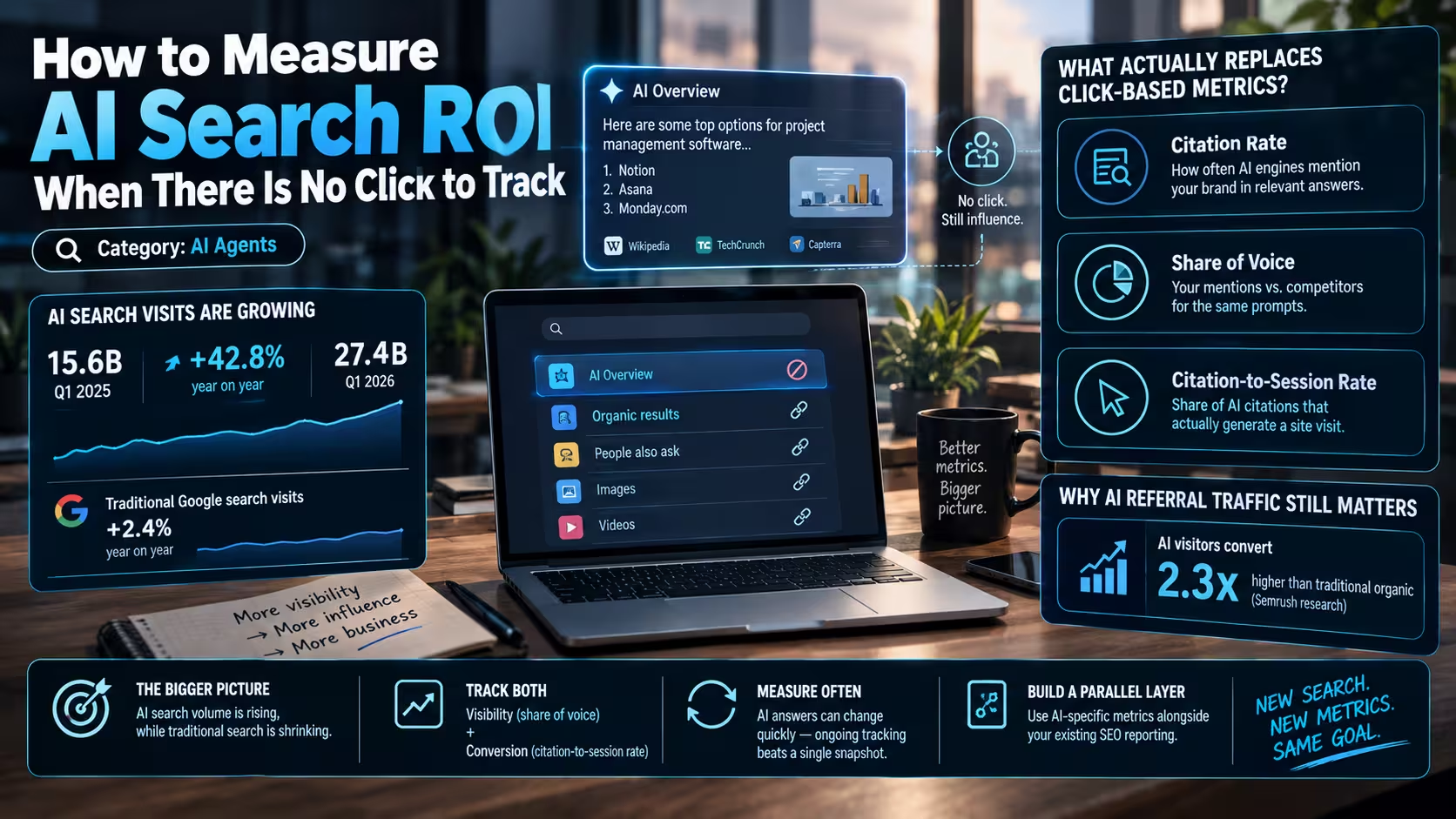
The Amelia phenomenon occurred against a backdrop of dramatic changes in how search engines operate and how users discover content. Understanding these shifts is essential for businesses seeking to leverage AI whilst avoiding Amelia’s pitfalls. Search Engine Land reports that AI-driven search traffic has increased by 527% over the past year, representing a fundamental transformation in digital discovery. This explosive growth reflects the integration of AI overviews, conversational search interfaces, and semantic understanding into platforms like Google, Bing, and newer AI-native search tools.
Amelia’s content achieved remarkable visibility precisely because it aligned with several factors that AI search engines prioritise. The memes generated high engagement through likes, shares, and comments, which search algorithms interpret as signals of relevance and value. The content was highly topical, addressing current political debates in the UK, which gave it temporal relevance. Additionally, the semantic coherence around the character, with thousands of pieces of content referencing the same entity, helped establish Amelia as a recognised topic worthy of prominent placement in search results.
Entity Recognition: The New Search Currency
For UK businesses, this presents both opportunity and challenge. Data from Superlines indicates that brands in the top 25% for web mentions secure ten times more AI visibility compared to those with fewer mentions. The top 50 brands capture 28.9% of all mentions in AI overviews, demonstrating significant concentration of visibility amongst well-established entities.
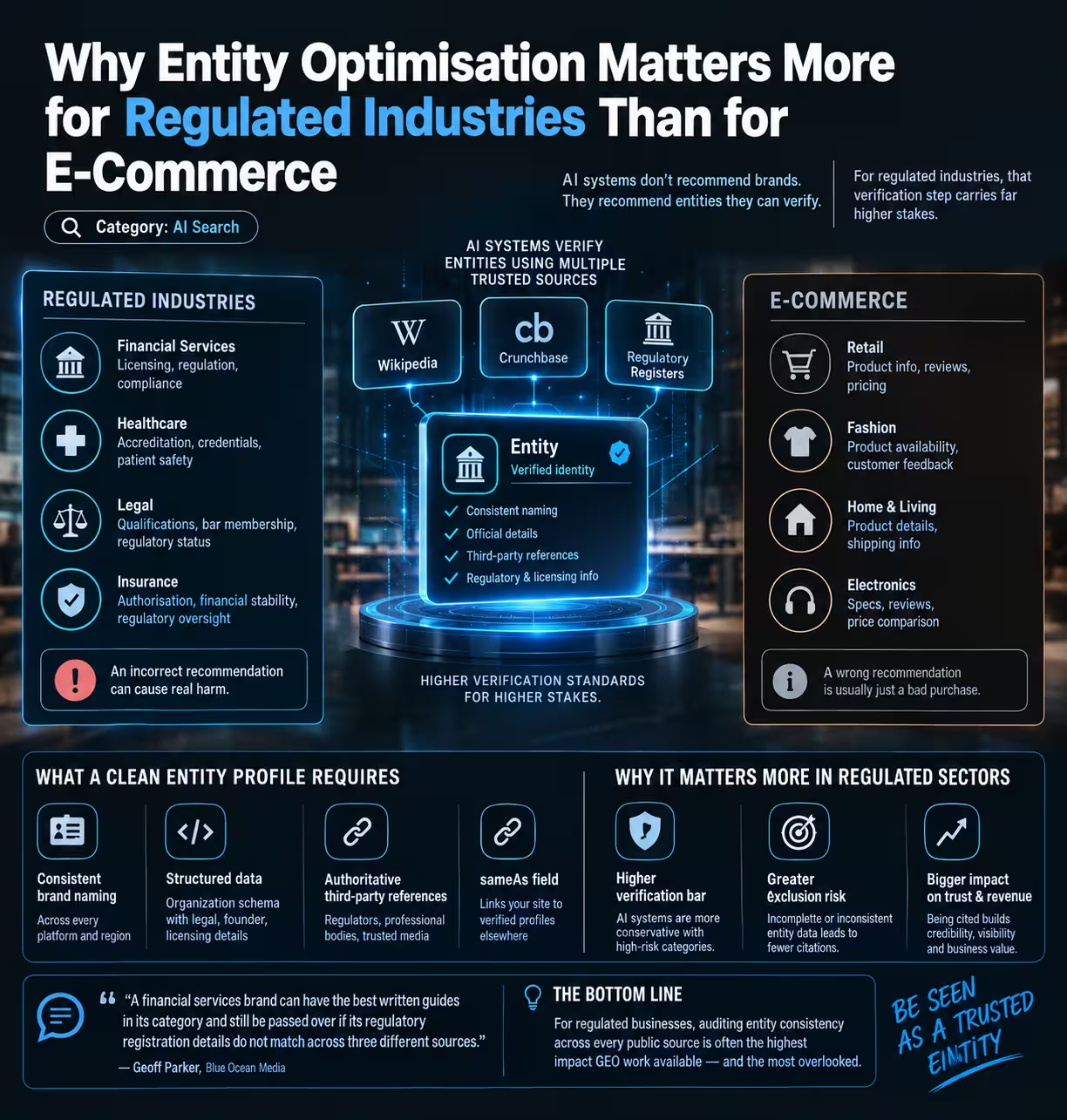
This creates a clear imperative: businesses must optimise for entity recognition within AI systems. This involves consistent branding across platforms, generating content that search engines can semantically connect to your business entity, and building the kind of engagement signals that indicate relevance and authority within your sector.
The Shift Towards Conversational Content
Research from Semrush reveals that 25% of US respondents find AI-powered search results more specific to their queries, with similar trends evident in the UK market. This specificity rewards businesses that create conversational, naturally-phrased content addressing specific user questions rather than traditional keyword-stuffed approaches. The shift towards natural language processing means content must read as though written for humans in dialogue, not robots scanning for keywords.
The share of AI-generated content appearing in Google’s top 20 results peaked at 19.56% in July 2025, according to SEO Works. By 2026, optimising for AI search engine results pages requires understanding how AI overviews select and synthesise information. Content that directly answers questions, provides clear factual information, and demonstrates expertise tends to perform well in these AI-curated summaries.
Visibility Without Control: The Amelia Paradox
However, the Amelia case introduces an important caveat. Whilst her related content achieved extraordinary visibility, it represented an uncontrolled viral phenomenon rather than a strategic business initiative. For commercial applications, the goal should be achieving visibility through positive association rather than controversy.
Data from Siege Media indicates that 62.8% of users experienced content traffic growth after implementing AI strategies, whilst 36.4% saw declines. The difference often lies in how strategically AI is deployed. Businesses that integrate AI as part of a coherent content strategy, with clear brand guidelines and quality controls, tend to see positive results. Those that simply deploy AI-generated content without strategic oversight risk the kind of narrative loss that occurred with Amelia.
Practical Implications for UK Businesses
For UK companies, it’s now clear that AI-driven content can significantly boost discoverability in search engines, but only when deployed thoughtfully. This means creating content that genuinely serves user needs, maintaining consistent brand messaging across all AI-generated materials, and implementing monitoring systems to track how AI content performs and how audiences respond to it.
The 527% increase in AI search traffic represents enormous opportunity, but capturing that opportunity requires more than simply generating content. It demands understanding how AI systems evaluate relevance, authority, and trustworthiness, then creating content strategies that demonstrate these qualities whilst remaining distinctly human in voice and value.
AI Agents: The Interactive Frontier
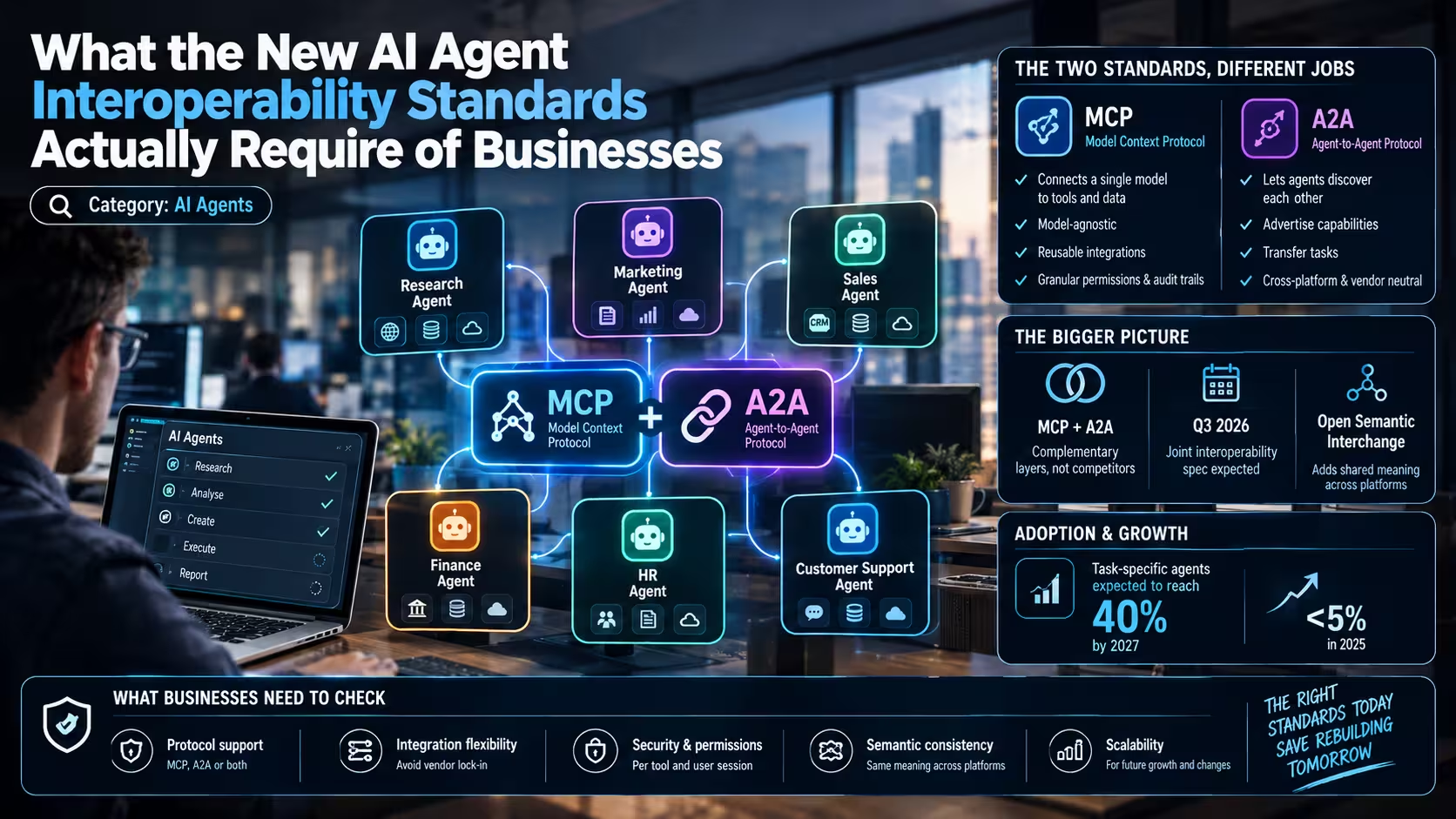
Beyond content discoverability, AI agents represent another frontier where businesses can apply lessons from the Amelia case to create value whilst avoiding pitfalls. AI agents differ from static content by enabling interactive, dynamic exchanges with users. These might include chatbots on websites, virtual assistants for customer service, or interactive tools for product recommendations. The technology has matured significantly, with businesses reporting substantial returns on investment when agents are properly implemented.
According to Landbase data, businesses adopting AI agents report an average return on investment of 171%, with US enterprises achieving 192%. These figures exceed traditional automation by three times, reflecting AI agents’ ability to handle complex, context-dependent interactions that simpler systems cannot manage.
The Business Case for AI Agents
Warmly AI research indicates that companies using AI agents see up to 37% cost savings in marketing operations, alongside revenue uplifts of 3 to 15%. Sales return on investment rises by 10 to 20%, demonstrating that well-designed agents don’t merely reduce costs but actively drive business growth through improved customer engagement and conversion.
For UK firms, these statistics suggest significant opportunity in customer-facing AI applications. However, the Amelia case offers crucial context. The character was designed to interact with users through dialogue choices in the game, representing an early form of conversational AI. The problem arose not from the interactive mechanism itself but from how users perceived and reinterpreted the character’s purpose. Understanding the difference between AI agents, chatbots, and assistants becomes critical for selecting the right solution.
Enhanced Decision-Making and Customer Experience
Deloitte’s 2026 AI report shows that 53% of organisations enhance insights and decision-making with AI, whilst 40% reduce costs. When applied to customer interactions, AI agents can simulate engaging dialogues for education, sales, or support. The key lies in ensuring these interactions remain aligned with business objectives and brand values.
Master of Code statistics reveal that AI agents deliver 128% return on investment in customer experience and enable 35% faster lead conversion. Additionally, 93% of business leaders agree on scaling AI for autonomous workflows, indicating widespread acceptance of agent technology in commercial contexts.
What AI Agents Can Do for Your Business
These agents can handle tasks that would be impractical or expensive with human staff alone. A well-designed AI customer service agent can manage thousands of simultaneous conversations, provide instant responses at any hour, and maintain consistent quality across all interactions. For London businesses operating in competitive markets, this capability can provide significant advantages.
However, implementing AI agents successfully requires learning from Amelia’s failure. The character was designed with a specific educational purpose but lacked the safeguards to prevent reinterpretation. Business AI agents must be built with clearer constraints, more robust guidance systems, and regular monitoring to ensure they’re being used as intended.
The ROI Trajectory for AI Agents
Fast Company notes companies expect 16% return on investment on AI in 2025, rising to 31% by 2027. These projections assume thoughtful implementation rather than rushed deployment. For UK enterprises, this suggests taking time to properly design AI agents, test them with real users, and refine them based on feedback before full-scale rollout.
Practical applications might include AI agents that help customers navigate complex product catalogues, provide personalised recommendations based on user preferences, or guide users through onboarding processes for services. The interactive nature creates engagement whilst the controlled environment prevents the kind of narrative drift that affected Amelia.
Purpose and Control: The Critical Difference
The distinction between successful AI agents and cautionary tales like Amelia often comes down to purpose and control. Commercial AI agents typically operate within defined parameters, addressing specific business functions with measurable outcomes. Amelia existed in a more open-ended narrative context where users could project their own interpretations onto the character, ultimately overwhelming the original intent.
For businesses in the UK market, AI agents represent proven technology with substantial returns when properly implemented. The key lies in clear objectives, appropriate constraints, and ongoing monitoring to ensure agents serve their intended purpose whilst creating positive user experiences.
Understanding AI Content Risks
The Amelia case study provides a masterclass in what can go wrong with AI content, making risk mitigation essential for businesses pursuing AI strategies in 2026. SentinelOne outlines several AI risk mitigation tools for 2026, including defences against prompt injection and data poisoning. Prompt injection involves users manipulating AI systems through carefully crafted inputs, potentially causing the system to behave in unintended ways. Data poisoning occurs when training data is corrupted, leading to flawed outputs. Both risks are relevant to businesses deploying AI content tools or agents.
For UK businesses, preventing content subversion like what occurred with Amelia requires multiple layers of protection. This begins with establishing clear AI acceptable-use policies that define how AI tools should be deployed, what content they should create, and what boundaries they must respect. The Business Journals recommends monitoring user behaviour and implementing frameworks like the NIST AI Risk Management Framework to scale mitigation efforts based on company size and risk exposure.
Conducting AI Search Audits
Conducting AI search audits with tools from Superlines helps businesses understand current visibility and identify opportunities. These audits reveal which topics your business is associated with in AI search results, how often your brand appears in AI overviews, and what competitors are achieving. The statistic that top-mentioned brands gain ten times more exposure in AI overviews underscores the value of understanding and improving your position.
Measuring return on investment with Deloitte benchmarks provides context for your results. Knowing that 53% of organisations enhance decision-making with AI and 40% reduce costs helps establish realistic expectations. If your implementation achieves similar or better results, you’re on the right track. If results lag significantly, investigation is warranted to identify whether issues lie in technology, strategy, or execution.
Empowerment, Not Replacement
All to often AI is discussed as being a replacement for human output, but in reality it is empowering output. With the ability to create AI content that is indistinguishable from human created content, companies can now scale content production and reach far beyond what was achievable two years ago. This is for video, imagery, and text based content that can be repurposed across all major social media and web platforms.
The opportunity for businesses is quite substantial. The risks are real but manageable. The question is whether your business will grasp this digital media shift and learn from others’ mistakes to create your own successes, turning potential pitfalls into strategic advantages in the AI-driven marketplace of 2026.