
We are entering a year where search behaviour is no longer defined by volume but by citation and impressions. In 2025 alone, AI-generated answers reduced organic click-through rates by 61%, while conversational interfaces handled an increasing share of complex queries that previously required multiple searches (Search Engine Land, Nov 2025). Search is still growing in usage, but its economic value is being redistributed away from publishers and towards answer engines, AI search engines like ChatGPT, Grok, Claude etc.
As it’s the beginning of the new year, we are today looking at the five AI search trends that will matter most in 2026 so we can help you and your business get ahead of the game. Each point reflects a structural shift rather than a tactical change, and each forces marketers and business leaders to rethink how visibility, trust and demand are created in an environment where answers increasingly arrive without clicks.
Conversational and personalised AI search is replacing traditional search
Sometimes you know exactly what you want when you go to Google. You find the relevant result, click on it and make an enquiry or buy. But sometimes you may roughly know what you want but don’t know the specifics. For example, you may want a new pair of casual trousers, but you aren’t sold on the final specifications. A conversational search on an AI answer engine would allow you to find out what you do and don’t want in that new pair of trousers. This is a huge game changer in search semantics.
Conversational and personalised AI search is replacing transactional search by maintaining context, understanding intent, and delivering tailored answers rather than lists of links. By mid-2026, 40% of enterprise applications will include conversational AI agents, embedding dialogue-based search directly into everyday workflows (Gartner, Aug 2025).
Large language models now interpret long, ambiguous queries, refine them through follow-up questions, and personalise responses using location, behavioural data and prior interactions. Platforms such as ChatGPT and Google’s Gemini already combine natural language processing with real-time retrieval, reducing search time for complex tasks by up to 50% (Econsultancy, Dec 2025). This efficiency gain explains why conversational interfaces are preferred by younger users, with 60% of searches among 18–34-year-olds now conducted via voice or chat assistants (BigFishPR, Oct 2025).
Personalisation extends beyond relevance into anticipation. Retail and content platforms increasingly surface answers and recommendations before a query is fully formed, driving 20–30% higher conversion rates in commerce environments (Google, 2025). As conversational competence improves, interaction with AI begins to resemble human dialogue, making the transition from typed queries to spoken, ambient requests an incremental rather than radical shift.
We are moving away from a transactional relationship in how we seek answers, and moving to a more humanistic approach. Is this the beginning of the humanisation of technology? If we master this bit and we can converse with AI online in text or speech format, the next step when we are asking bi-pedals in our home to do something or research something for us will be a natural step for many.
Organic traffic is declining faster than most forecasts predicted
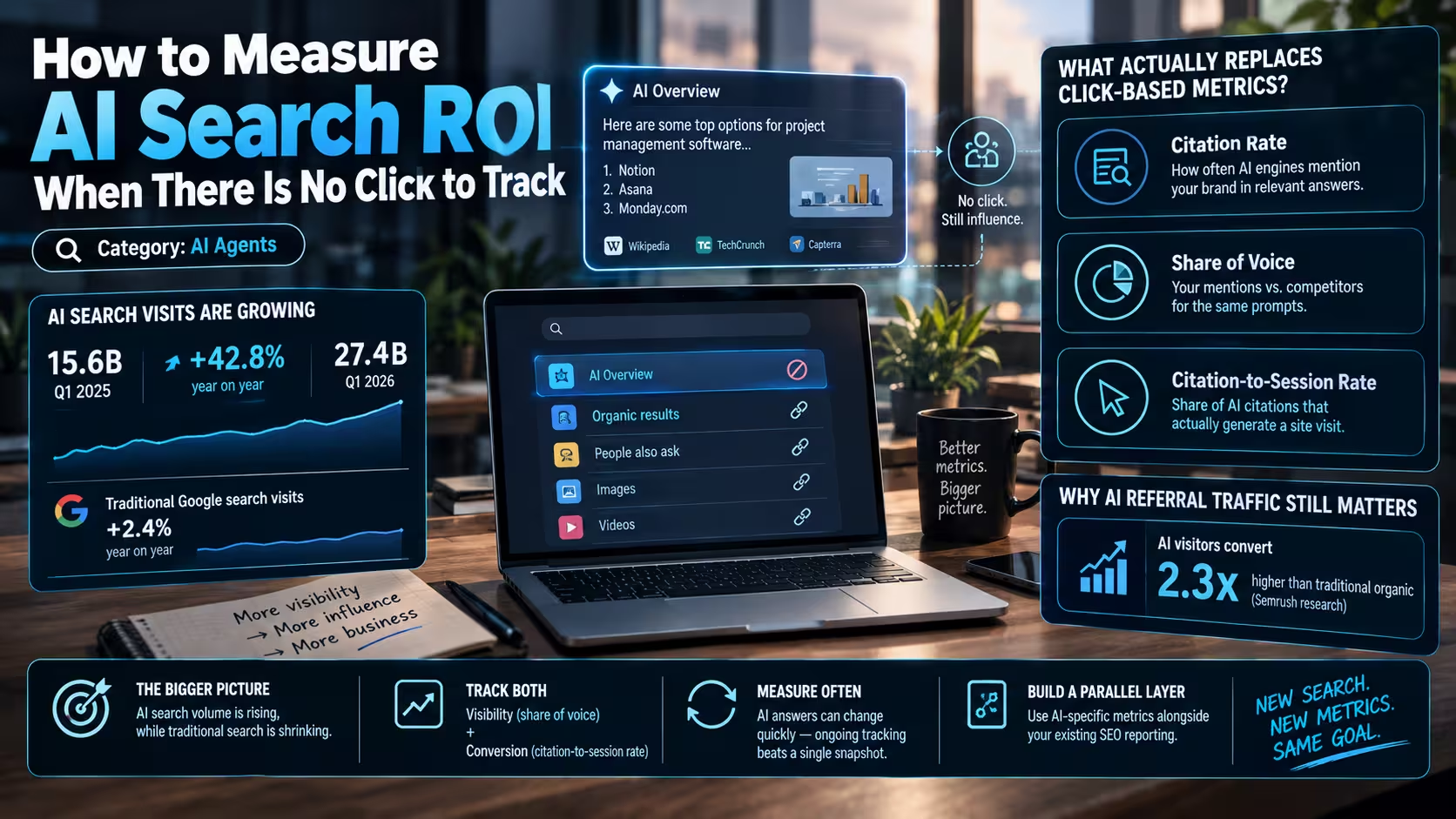
Organic traffic is declining because AI search engines increasingly resolve queries on the results page, eliminating the need to visit source websites. Between mid-2024 and late 2025, click-through rates on queries featuring AI summaries fell from 1.76% to 0.61%, a structural collapse rather than a cyclical dip (Search Engine Land, Nov 2025).
This shift accelerated with the rollout of AI Overviews, which now appear in over 13% of all Google queries, converting a growing share of searches into zero-click outcomes (The Digital Bloom, Oct 2025). Publishers reported median year-on-year traffic declines of 10%, with non-news sites falling by 14%, even where rankings remained unchanged (The Digital Bloom, Oct 2025). Search volume continues to rise, but clicks do not follow, creating what analysts describe as a decoupling between visibility and traffic.
In 2026, traditional search volume is expected to fall by 25%, with some content categories experiencing traffic losses approaching 50% (Gartner, Feb 2024; Onely, Dec 2025). In response, performance metrics are shifting away from sessions and towards citation frequency, topical authority and presence within AI-generated answers. Content quality, accuracy and usefulness increasingly matter more to models than to algorithms optimised for link ranking.
Companies will seek professional AI SEO services to help maximise appearance in AI answer engines. The question will be does this form an additional cost to traditional SEO, or a separate budget entirely.
Pay-to-play in AI answer engines will replace Google Adwords
Advertising has not yet entered AI answer engines directly, but the commercial logic points to its arrival through control layers rather than visible ad units. In 2026, the pressure comes from the same imbalance that reshaped organic search, usage is rising while monetisation per query is falling, and no platform sustaining inference costs at scale can leave that gap unaddressed.
The most likely route is not banner-style adverts inside answers, but paid influence over eligibility and prominence within AI-generated responses. Models already rank, filter and cite sources, and commercial relationships will shape which brands are considered safe, authoritative, or integration-ready when an AI agent assembles an answer. This mirrors how shopping feeds, hotel listings and map results evolved long before adverts were labelled as such, with payment influencing inclusion before presentation followed later.
Search budgets are already shifting in anticipation. Gartner projects a 25% decline in traditional search volume by 2026, yet paid search investment rose 6% as brands attempt to secure presence where demand still converts (Gartner, Feb 2024; Dentsu, 2025). The economic signal is clear, visibility will increasingly be bought upstream, at the data, partnership and integration level, rather than downstream through clicks.
AI agents accelerate this shift. As agents act on behalf of users, selecting suppliers, products or services autonomously, brands will compete to be recognised by those agents as preferred options. Payment in this context is unlikely to resemble advertising at all. It will take the form of data access agreements, certified feeds, priority integrations, and commercial relationships that influence how often a brand is surfaced when an agent makes a recommendation.
This transition places particular strain on incumbent search platforms like Google Adwords. PPC marketing on Google may quickly become a thing of the past. Keyword-based auction models depend on user interaction with results pages, while AI answer engines collapse that interaction into a single response. As monetisation migrates away from clicks and towards decision influence, the economic foundations of traditional paid search face structural disruption rather than incremental change.
What role will AI agents play in search and decision-making?
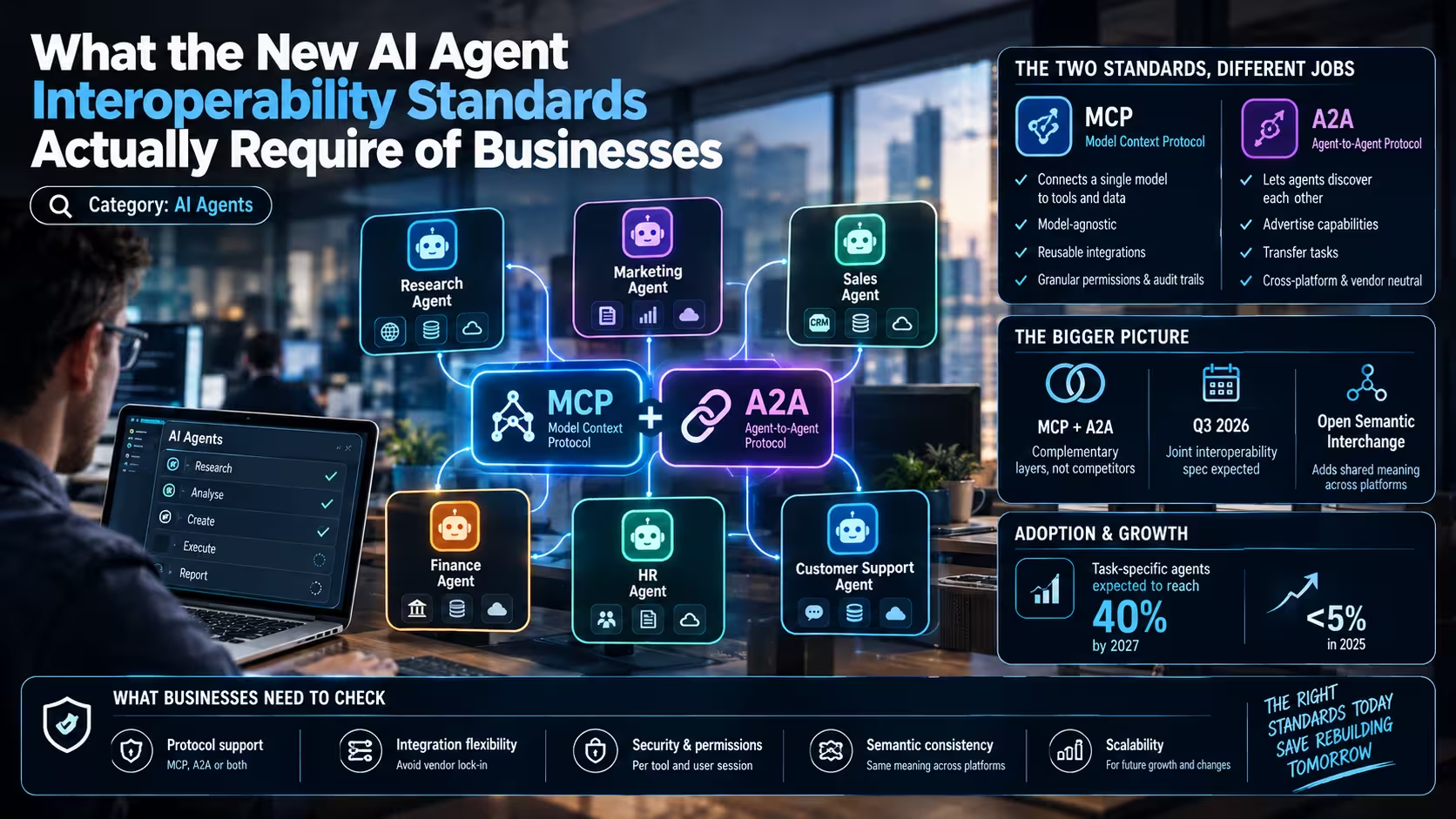
AI agents will act as intermediaries, conducting searches, comparisons and transactions autonomously on behalf of users and organisations. By late 2025, 57% of companies had AI agents in production, handling tasks ranging from procurement to customer support.
Buyer-side agents interpret intent, filter options and optimise outcomes without emotional bias, reshaping how brands are evaluated. These systems rely on structured data, retrieval-augmented generation and direct integrations rather than traditional web pages. Internally, companies are deploying agents capable of querying proprietary documents, databases and workflows, reducing information retrieval latency and improving operational efficiency across sales, HR and support functions.
Gartner expects 40% of applications to include AI agents by 2026, rising to 50% the following year. As conversational fluency improves, differentiation between human and machine interactions diminishes, particularly in service environments. Early chatbot implementations already appear crude by comparison, and the expectation of seamless, context-aware interaction will become standard rather than exceptional.
How is social media reshaping real-time AI search and trust?
Social media is reshaping AI search by supplying real-time data and acting as a proxy for trust and authority. Models that integrate live feeds can surface information hours ahead of traditional search engines, with platforms such as xAI’s Grok achieving sub-400ms latency by drawing directly from X’s data stream (X Freeze, Sep 2025).
This capability proves critical for live events, breaking news and fast-moving situations where static content quickly becomes obsolete. For example, yesterday the premier league match between Fulham and Liverpool was delayed. A search on Google yielded no answers, but a query on Grok showed that this was due to a medical emergency. The same with the Leeds match against Manchester United, this was also delayed due to a medical emergency in the stadium, and the same result happened on Google versus Grok. At the moment Grok, particularly with it’s access to data on the X platform, is perfectly geared up to be the best at this information retrieval in real time.
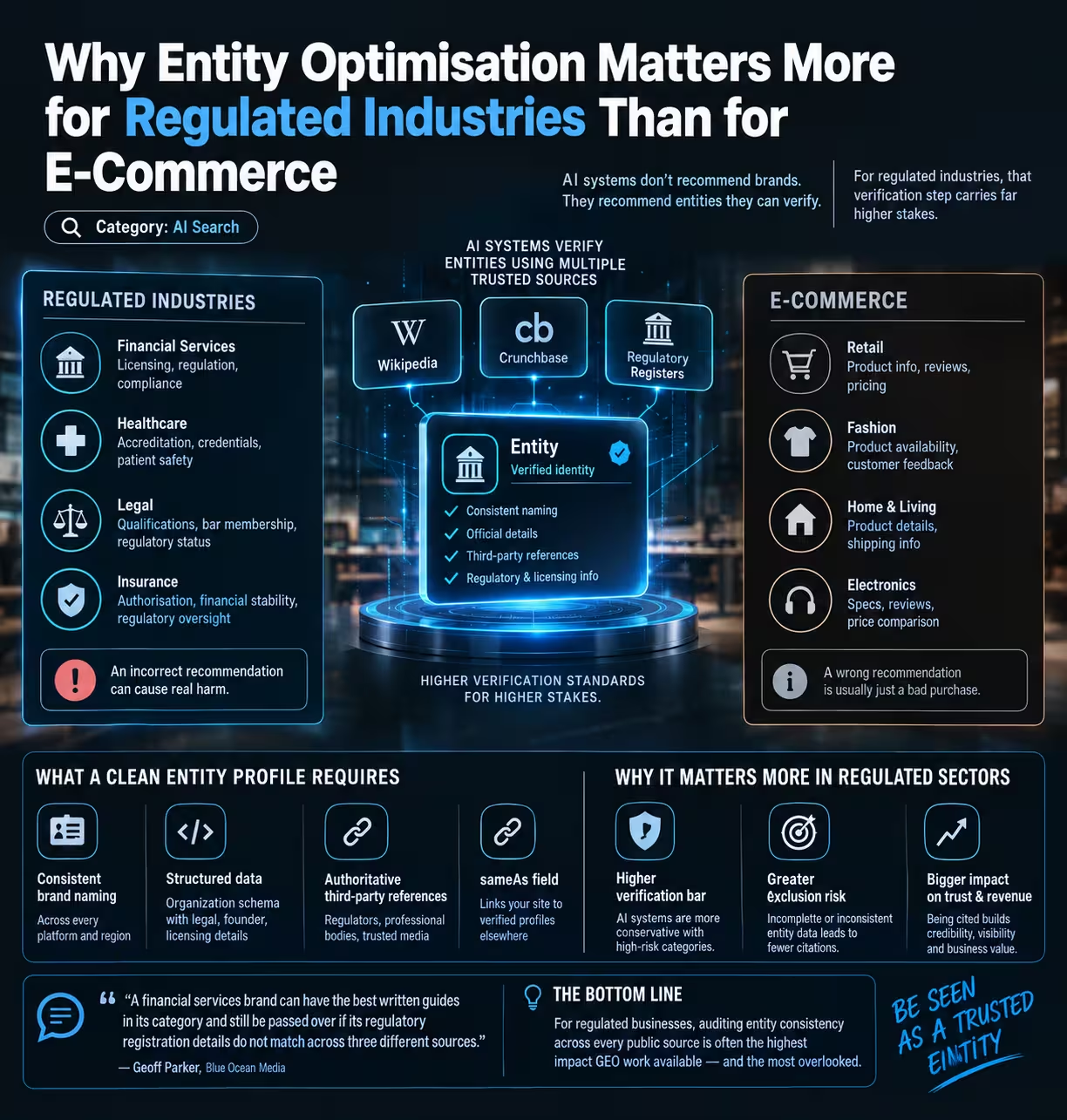
In parallel to real time retrieval, AI models increasingly weight earned media signals such as reviews, forum discussions and citations, with 34% of AI search citations now derived from PR and social sources (Search Engine Journal, Dec 2025). Trust signals help models mitigate misinformation risk while providing socially validated recommendations.
Video and social content already influence 11% of AI-generated results, reflecting a broader shift towards multimodal evidence (Envisionit, Dec 2025). As reliance on conversational answers grows, authority will be determined less by domain strength and more by consistent, credible presence across trusted social environments.
Final Thoughts: AI agents will mediate over 40% of search-driven decisions by 2026
By the end of 2026, the commonplace behaviour for retrieving information will dramatically shift from Google to high performing AI answer engines that act has specialised agents. The defining feature of search will not be where answers come from but who acts on them. As AI agents mediate a growing share of discovery, evaluation and purchasing, visibility depends on being legible to machines as well as persuasive to humans. Businesses that continue to optimise solely for clicks risk disappearing from the decision layer altogether, while those that invest in authority, structured knowledge and agent-compatible content position themselves for relevance in a search economy that increasingly operates without users ever seeing a results page.