
Roughly 65% of Google searches now end without a single click to any website, and that figure jumps to 83% the moment an AI Overview appears above the results, according to SparkToro and Bain & Company data tracking search behaviour through 2026.
In Google’s AI Mode specifically, the zero click rate climbs as high as 93%, meaning fewer than one in ten of those queries send a visitor anywhere at all. For any business still measuring digital performance primarily through website sessions, that shift changes what success actually looks like.
This article sets out what zero click search actually means for traffic, and why the more useful question for most businesses is no longer how to earn a click, but how to earn a citation.
What Zero Click Actually Means for Traffic
The zero click rate is not uniform across query types, and that variation matters more than the headline figure alone. Simple informational and definitional queries, the kind AI Overviews answer most confidently, see zero click rates as high as 74% to 89%. Transactional and commercial intent queries behave differently, holding zero click rates closer to 31% to 39%, since people comparing products or making a purchase still want to visit a site before deciding.
The practical implication is that content built to answer a discrete question is increasingly being read and never clicked, while content built to help someone choose between options is still earning genuine visits. Businesses producing large volumes of the first type of content without accounting for this split are likely to see traffic declines that have little to do with content quality and everything to do with query type.
What Websites Are for Now
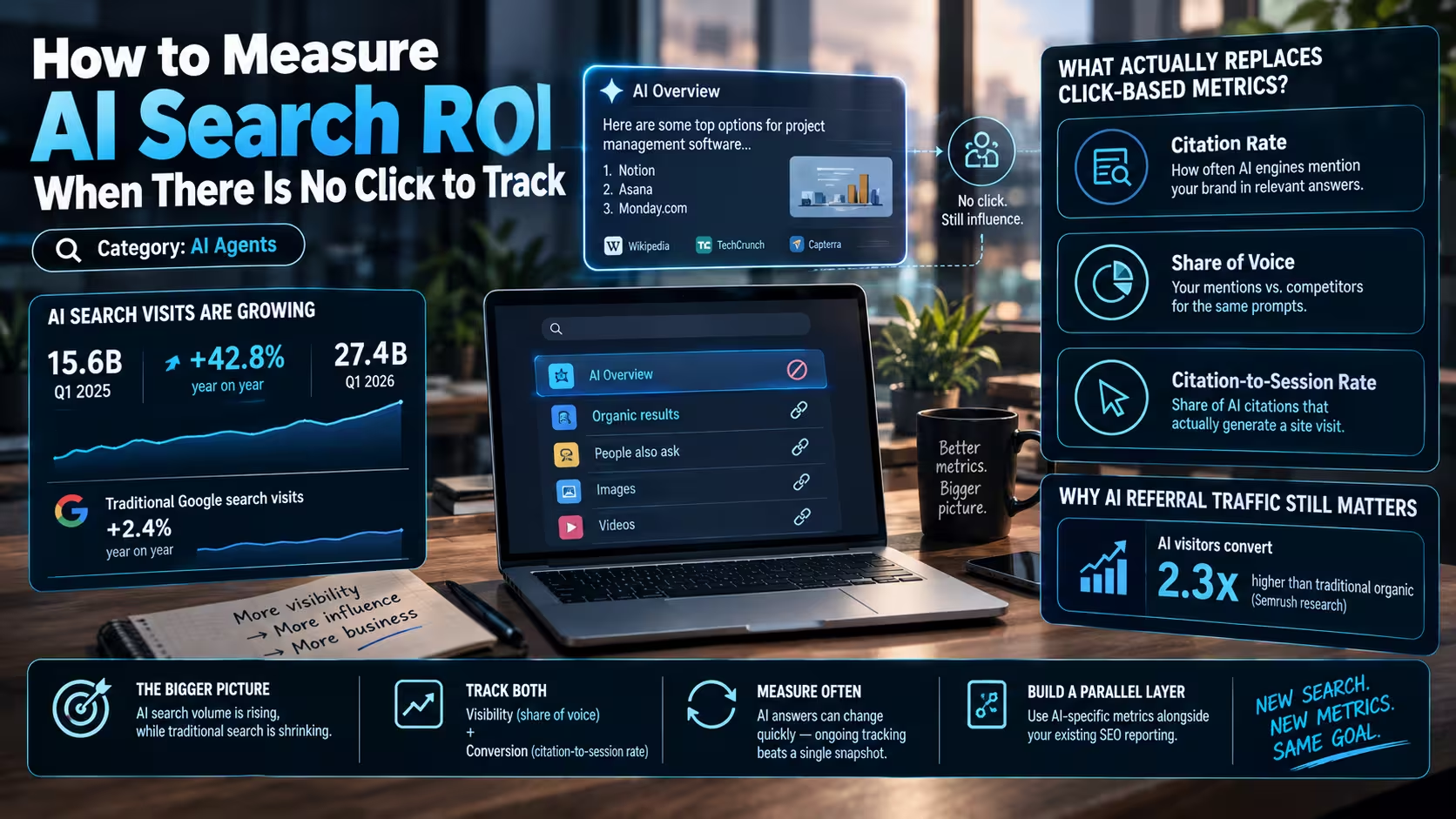
The instinct is to treat a falling click rate as pure loss, but the data suggests a more specific reframing is more useful. Brands that are actually cited within an AI Overview are seeing meaningfully higher engagement from the clicks that do arrive, with some research placing the conversion lift as high as four to nine times that of a standard organic listing, precisely because a user who clicks through after already seeing a brand named and trusted inside an AI answer arrives with far more intent than one scanning ten blue links. A website’s job is shifting from being the first stop in a research journey to being the credibility check after an AI answer has already done the initial persuading.
That shift changes what content is actually for. A page optimised purely to rank and capture a click is solving yesterday’s problem. A page structured so an AI system can confidently extract, attribute and cite it, clear claims, direct answers, verifiable data, is solving the one increasingly in front of every business today, which is exactly the discipline AI search optimisation now exists to address rather than treating it as an extension of conventional SEO.
Measuring that requires different instruments entirely, tracking citation frequency across AI platforms and SERP feature appearances rather than sessions and bounce rate alone, since a page can be doing enormous commercial work inside an AI answer while showing almost no movement in traditional analytics.
83% of AI Overview Searches Now End Without a Click
Discussion among marketing and SEO leaders has moved past debating whether zero click search is real, which is now broadly settled, and into disagreement over how aggressively to shift resourcing away from traditional click-focused content. Some argue the transactional query data shows plenty of click-driven opportunity remains, while others point to the informational query figures as evidence that an entire content category is being quietly hollowed out beneath still-healthy looking traffic totals.
For any business still reporting success primarily through session counts, the sensible next step is adding citation tracking and AI platform visibility alongside existing analytics rather than replacing one blind spot with another.
With zero click behaviour now the default state of search rather than an edge case, the businesses building content for extraction and attribution today will be the ones still visible once the click becomes the exception rather than the expectation, while competitors still optimising purely for traffic discover the audience was there all along, just never landing on their site to be counted.