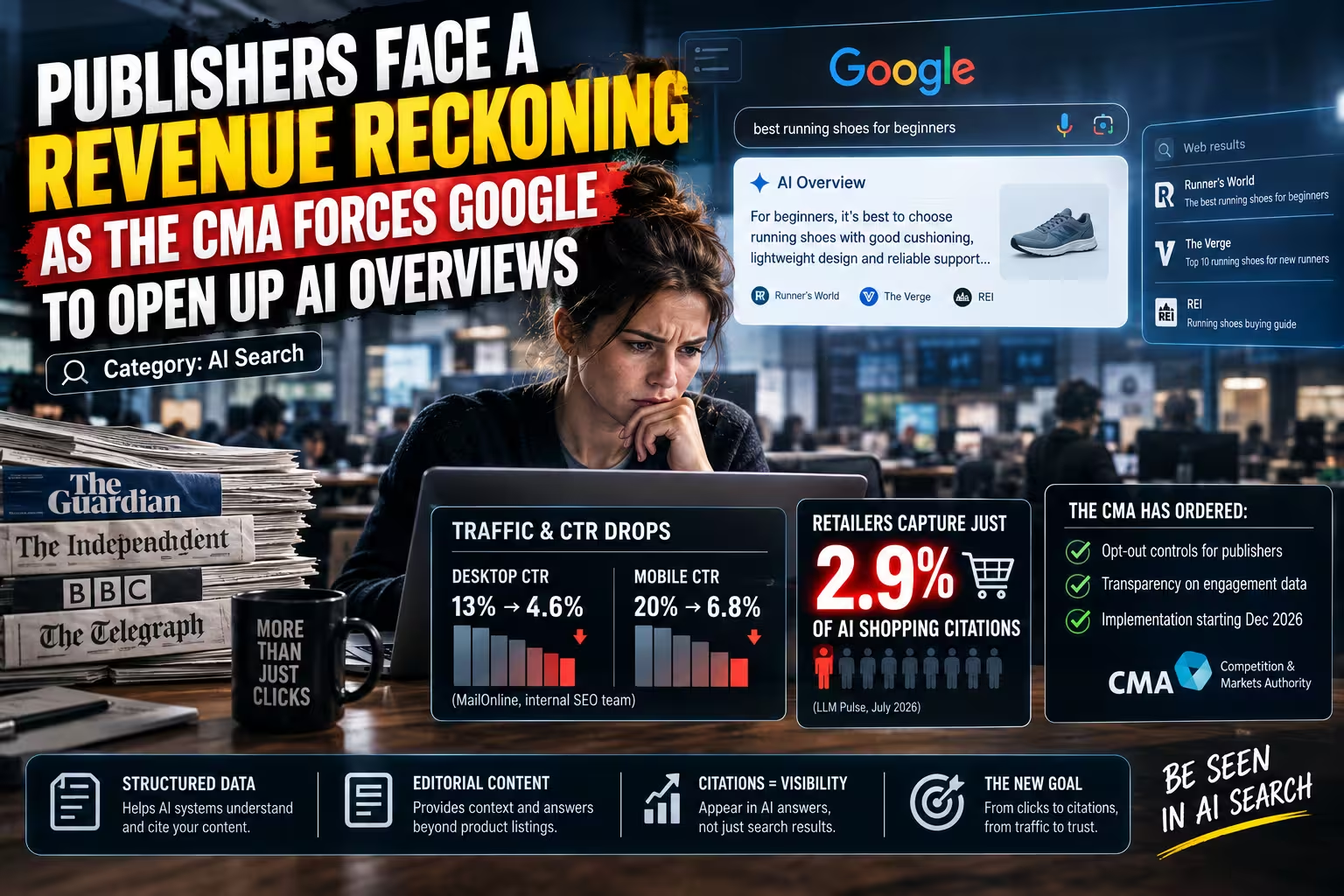

Search has quietly stopped being a list of links. Google AI Overviews now appear in more than 25% of searches, up from 13% in early 2025, and around 80% of technology buyers say they lean on generative AI at least as heavily as traditional search when researching suppliers. The page of blue links still exists, but for a growing share of high value queries it is no longer where the decision gets made.
That shift has exposed an uncomfortable truth for anyone who spent a decade building backlinks. The signals that won rankings on Google are not the same signals that get a brand named inside an AI answer. This article sets out why entity optimisation has become the deciding factor for AI search visibility, why backlinks are losing their grip, and what a brand actually has to do to be the source an AI chooses to cite.
What is entity optimisation?
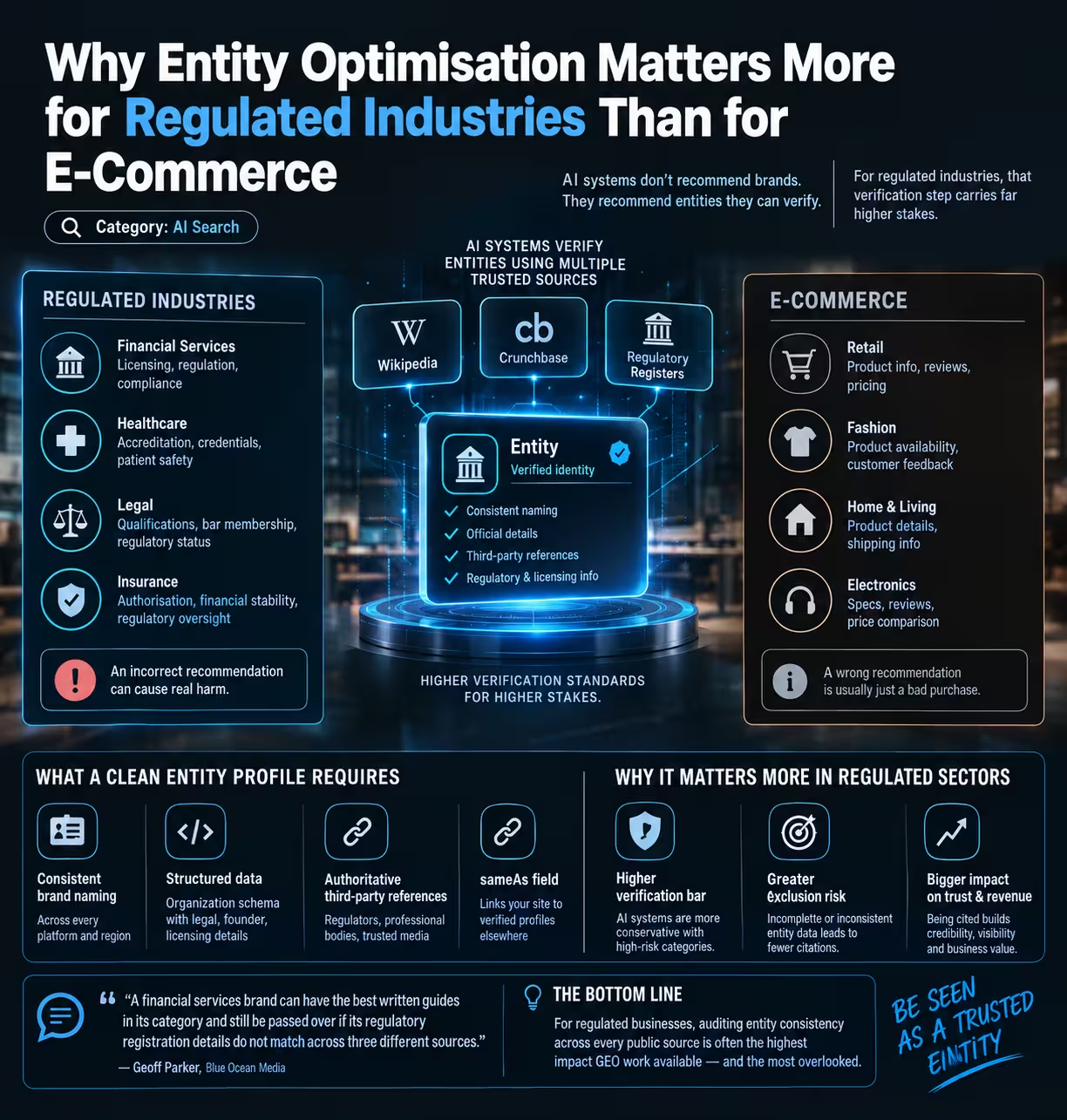
Entity optimisation is the practice of making a brand, person, product or concept recognisable to AI systems as a distinct, well defined entity, so that models understand what the brand is, what it does and how it relates to other things they already know.
Where traditional SEO optimised pages for keywords, entity optimisation optimises the brand itself as a known thing across the web. It is the difference between a page that mentions a phrase and a company that an AI model can confidently describe, place in a category, and recommend by name.
This matters because large language models do not retrieve a webpage and read it the way a person clicks a result. They assemble an answer from what they understand about the entities involved, drawing on training data and live retrieval at once. A brand that exists only as a scattering of keyword optimised pages, with no consistent identity across the wider web, simply does not register as an entity the model can reach for.
Why are backlinks losing their grip on AI search?
The clearest evidence comes from how AI citations correlate with different signals. Research across 75,000 brands found that brand mentions correlate with AI Overview presence at roughly three to one over backlinks, a striking inversion of the link based logic that defined SEO.
A separate analysis described brand search volume as “the strongest predictor of LLM citations,” outweighing the traditional backlink profile that agencies spent years accumulating.
The reason is structural. A backlink tells a ranking algorithm that one page vouches for another. An AI model, by contrast, is trying to work out which entities are genuinely associated with a topic, and it learns that from how often and how consistently a brand is mentioned, described and discussed across sources it trusts.
Links still play a part, because models use live web search and stronger pages get retrieved more often. But the centre of gravity has moved from who links to you toward who talks about you and how clearly the web explains what you are.
How do AI engines actually choose what to cite?
Understanding the retrieval process makes the priorities obvious. When someone asks an AI a question, the system rarely searches the exact phrase. It performs query fan out, breaking the question into smaller sub queries and searching each one, then synthesises an answer from the sources it considers most relevant and trustworthy.
Most leading models now use retrieval augmented generation, combining what they learned in training with real time search results.
Two practical levers fall out of this. The first is trust by association, since models preferentially cite sources they already rely on, which is why a mention in a publication an AI frequently quotes can outperform a dozen pages on a brand’s own site.
The second is extractability. Content that states facts plainly, carries data and uses clear structure is easier for a model to lift into an answer. Industry testing suggests adding statistics can increase AI visibility by around 22%, while including quotations can lift it by roughly 37%.
The lesson is that AI search rewards content written to be quoted, not content written to be ranked.
Does this mean SEO is dead?
It is tempting to declare traditional search finished, and that is the popular narrative. It is also wrong.
AI models rely heavily on live web search to ground their answers, which means strong search performance directly feeds AI visibility rather than competing with it. Clean, crawlable content, sound technical health and credible authority signals remain the foundation on which entity recognition is built. A brand with no organic presence gives an AI nothing to retrieve.
The honest position is that SEO has not died, it has been demoted from the whole game to the foundation of a larger one. The contrarian point worth making to anyone panicking about the end of search is that the fundamentals they already invested in still matter, but they are now table stakes rather than the finish line.
The brands losing visibility are not the ones who did SEO, they are the ones who stopped at SEO and never built a coherent entity on top of it.
What does entity optimisation look like in practice?
In practice, entity optimisation is a discipline of consistency and presence. It starts with describing the brand identically wherever it appears, so that names, categories, locations and relationships line up across the site, directories, profiles and third party mentions, because contradictory descriptions confuse the model.
Structured data and schema help by spelling out those relationships in a form machines parse directly. A verified presence on widely referenced sources matters too, since models lean on them as anchor points for what an entity is.
Beyond the brand’s own estate, the work is about earning mentions in the sources AI already cites for a given topic. That means identifying which pages a model pulls from when answering questions in a sector, then getting the brand accurately represented within them.
An emerging technical standard, the llms.txt file placed in a site’s root, helps models locate a site’s most important content, and keeping key information in open HTML rather than behind logins or interactive elements ensures it is visible to AI crawlers at all.
None of this is a single trick. It is the steady construction of an entity the web describes the same way everywhere. For most firms this is where specialist AI search optimisation support earns its keep.
What is being discussed about AI search right now?
Sentiment among marketers through the first half of 2026 has swung from curiosity to genuine urgency, with a recurring anxiety that competitors are being cited in AI answers while their own brand is invisible.
The dominant conversation is about measurement, as teams scramble to track whether and where they are being mentioned across different engines rather than guessing. There is also growing unease about losing control of the narrative, since models can describe a brand inaccurately and that description shapes buyer perception before anyone reaches the website.
A quieter but important theme is fragmentation. Practitioners increasingly note that visibility on one platform does not transfer to another, and that the engines behave like distinct audiences rather than a single search market.
The mood overall has matured from whether AI search matters to how quickly a brand can build a defensible position in it.
Where is AI search visibility heading?
The direction of travel points toward fragmentation and drift becoming the central challenges. Engines diverge sharply in what they cite, and analysis found that only around 11% of domains are cited by both ChatGPT and Perplexity, which means a single optimisation effort no longer covers the field.
Brands face the prospect of managing visibility across several engines that each weigh sources differently. There is also the problem of perception drift, where a model’s description of a brand shifts over time without any change in the business itself, quietly eroding accuracy if left unmonitored.
What ties these together is that AI search is becoming a relationship to maintain rather than a ranking to win once. The entities that stay visible will be those whose presence is consistent enough, and mentioned widely enough, that models converge on the same accurate description across platforms.
As AI assistants increasingly act on behalf of users, the same entity foundations also feed into how autonomous tools select and recommend suppliers, which is why some firms now pair search work with AI agent development to control how they are represented to both humans and machines.
“For years, businesses could improve their visibility largely by acquiring more links, but AI search is changing that equation. Today’s models are far harder to influence because they evaluate how consistently and credibly a brand is described across the web, not simply how many websites point to it. The brands that succeed are the ones with a clear identity, strong reputation and genuine authority in their field, because those are the signals AI systems are increasingly designed to recognise,” says Geoff Parker, Managing Director of Blue Ocean Media.
Brand mentions now beat backlinks three to one in AI search
The evidence is decisive enough to act on. Brand mentions correlate with presence in AI answers at around three to one over backlinks, and the brands already being cited are pulling away from those still optimising for a search world that is shrinking.
For any business that depends on being found, the priority for the rest of 2026 is clear. Audit how AI engines currently describe you, fix the inconsistencies that confuse them, earn mentions in the sources they already trust, and write content built to be quoted rather than merely ranked.
The window to establish an entity before competitors do is open now, and it will not stay open indefinitely as categories fill up. The brands that move first will be the ones AI recommends by name, and that is increasingly where the buying decision is being made.