
For more than two decades, search visibility followed a relatively stable logic. Brands optimised pages, earned rankings, and captured traffic by appearing high in search results. Even as algorithms evolved, the core mechanism remained intact: users clicked links, websites received visits, and visibility translated into discovery. That model is now breaking down.
AI-powered search interfaces are increasingly answering questions directly, synthesising information instead of routing users to source pages. In this environment, being well ranked is no longer sufficient. If a brand is not included in the generated answer itself, it may never enter the user’s awareness. This shift has given rise to Generative Engine Optimisation, or GEO, a discipline focused on visibility inside AI-generated responses rather than traditional search listings.
What Generative Engine Optimisation Actually Means
Generative Engine Optimisation refers to the practice of optimising content, entities, and signals so that AI systems include a brand, product, or viewpoint within their generated answers. Unlike SEO, which targets rankings and clicks, GEO targets citation, mention, and inclusion at the point where answers are formed.
Generative engines do not simply retrieve pages. They synthesise patterns from multiple sources, summarise consensus information, and often paraphrase without direct attribution. As a result, brands can contribute knowledge to an answer without being named. GEO exists to address this gap.
The objective is not to drive traffic in the traditional sense, but to ensure that a brand is present when AI systems explain, recommend, or compare options. In practice, GEO is about becoming reference-worthy rather than clickable.
Why Traditional SEO Is No Longer Enough
SEO remains necessary, but it is no longer sufficient on its own. Strong rankings still influence what AI systems can see and learn from, but they do not guarantee inclusion. Generative models prioritise clarity, authority, and neutrality over promotional signals.
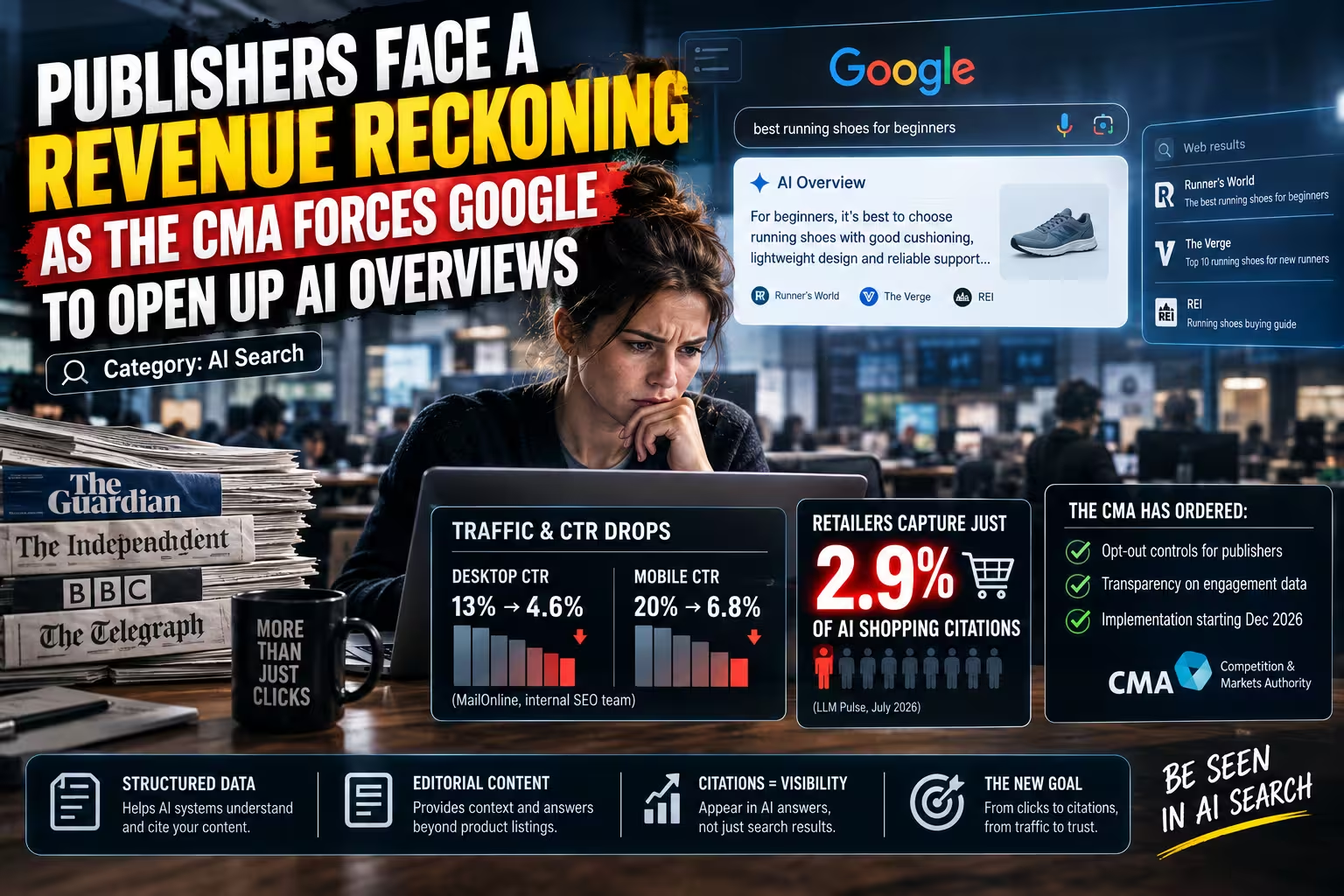
A brand may rank first for a query, yet be absent from the AI-generated answer that sits above those results. In this scenario, the user’s journey ends before SEO has a chance to work. Visibility is lost not because the brand performed poorly, but because the interface resolved the question without requiring exploration.
This is a structural change, not a temporary feature experiment. As generative answers expand across informational, comparative, and even commercial queries, the number of situations where SEO alone can deliver discovery continues to shrink.
How Generative Engines Decide What to Include
Generative engines evaluate information differently from ranking algorithms. Instead of scoring pages against keywords, they look for patterns, corroboration, and broadly supported statements. Content that is clear, well-structured, and consistently referenced across the web is easier to reuse in generated responses.
Brand-heavy pages focused on conversion often perform poorly in this context. By contrast, explanatory content, original research, definitions, and comparative frameworks are more likely to be synthesised. AI systems favour material that appears authoritative without being overtly promotional.
This explains why aggregators, directories, and third-party explainers often dominate citations. Their language is neutral, their structure is predictable, and their content is easy to generalise. GEO seeks to help brands compete in this environment by aligning their content with the way generative systems actually operate.
The Shift from Traffic to Presence
One of the most difficult adjustments for organisations is letting go of traffic as the primary measure of success. In generative search, presence matters more than visits. A brand that is named, explained, or recommended within an answer has achieved visibility, even if no click occurs.
This does not mean traffic is irrelevant, but it does mean it is no longer the leading indicator of influence. Brands absent from answers lose mindshare, not just sessions. Over time, this absence affects recall, trust, and downstream decision-making.
GEO reframes optimisation around being part of the narrative rather than the destination.
What GEO Looks Like in Practice
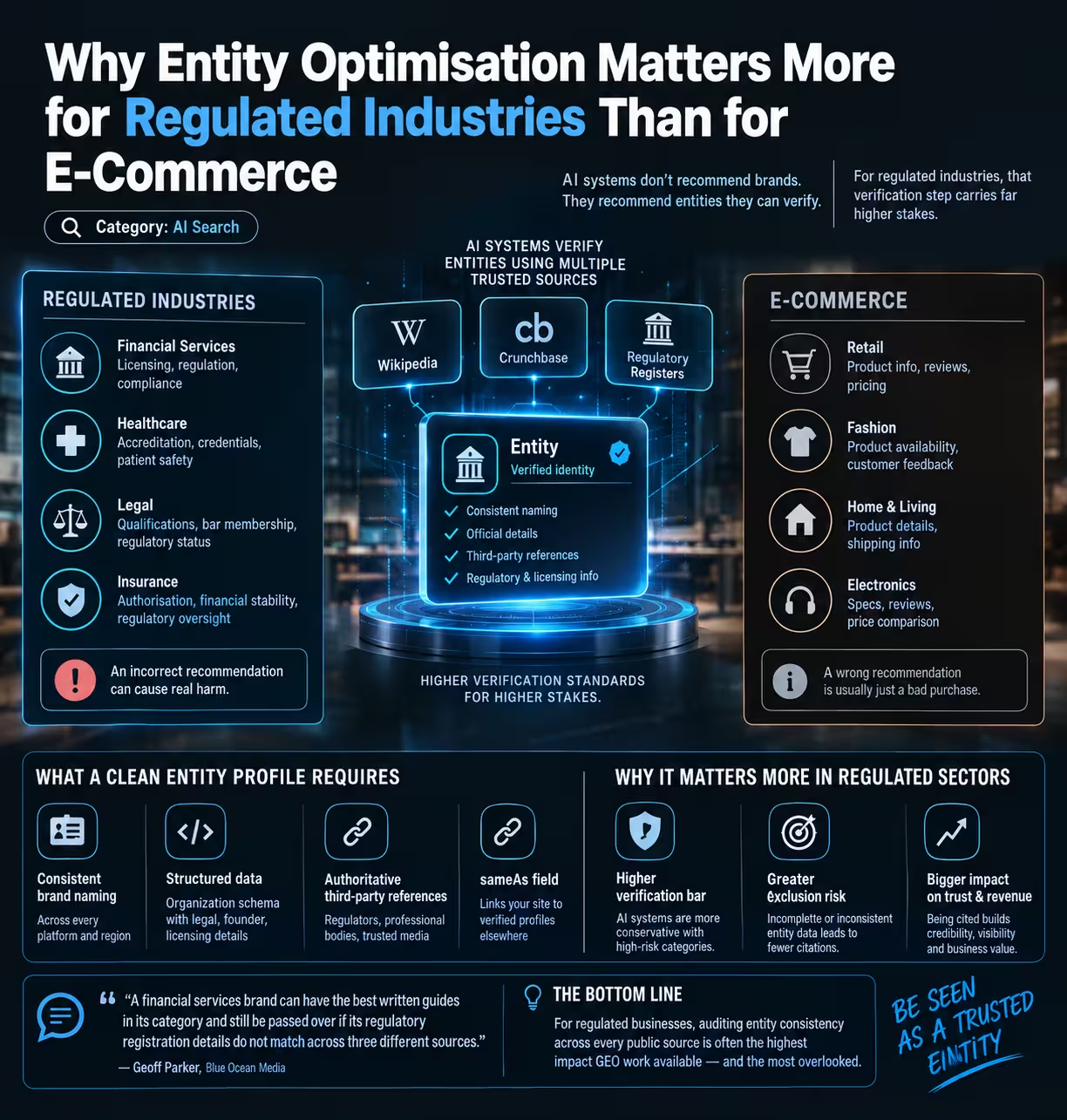
In practice, Generative Engine Optimisation involves strengthening entity clarity, publishing content designed for synthesis, and earning credible mentions beyond owned channels. It requires content that explains rather than sells, and signals that reinforce expertise rather than keywords alone.
Importantly, GEO is not about manipulating AI systems. It is about aligning with how they work. Brands that communicate clearly, support claims with evidence, and appear consistently across trusted sources are more likely to be included naturally.
Why This Is a Strategic, Not Tactical, Shift
The rise of generative search changes where discovery happens. Instead of a list of options, users increasingly receive a single, synthesised response. In that context, exclusion is far more damaging than a drop in ranking ever was.
Generative Engine Optimisation recognises this reality. It does not replace SEO, but it supersedes it as the primary visibility concern. Brands that continue to optimise solely for clicks risk becoming invisible at the moment decisions are formed.