
The rollout of Google’s Personal Intelligence in January 2026 has turned the SEO world on its head. We are no longer optimising for a static list of results; we are optimising for a synthesised, private dialogue. In AI Mode, Google’s Gemini 3 uses a user’s private data – Gmail, Photos, and Calendar – to filter the public web.
If your content isn’t visible to the “Personal Assistant” version of Google, it may as well not exist. Here is the definitive 2026 guide to ensuring your content survives the shift.
1. Pivot from Keywords to “Entity Trust”
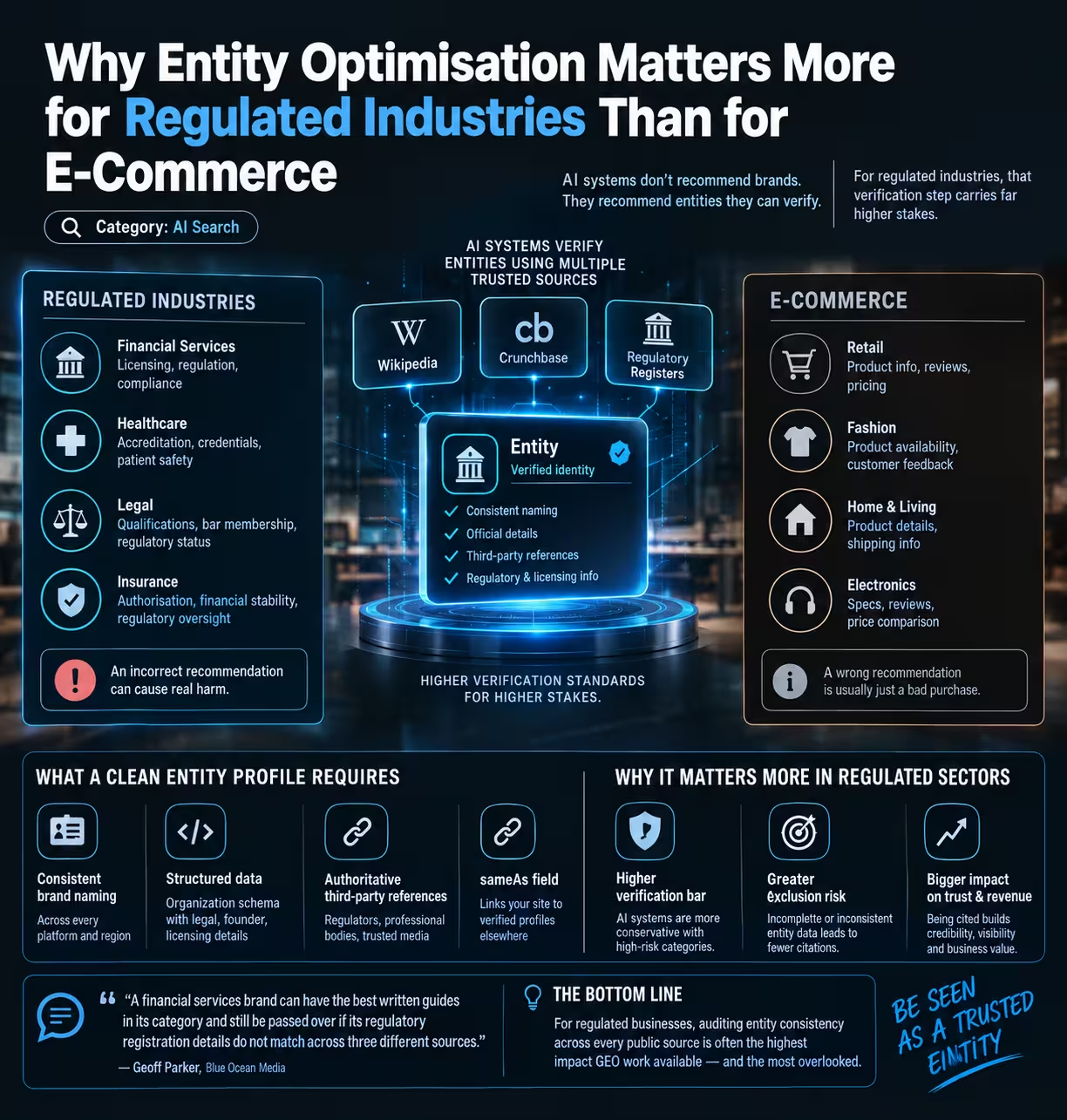
In the era of Personal Intelligence, Google isn’t looking for a keyword match; it is looking for an Authoritative Entity. The AI needs to be certain that your brand is a trusted expert before it risks recommending you within a user’s private context.
- Claim your Knowledge Graph: Ensure your brand has a robust, verified presence. Use “SameAs” schema to link your website to your official social profiles, Wikipedia entries, and industry citations.
- The “I” Factor: Google’s January 2026 “Authenticity Update” prioritises first-person experience. Avoid “The 10 Best Laptops” and move towards “Our Engineering Team Tested These 10 Laptops for 300 Hours.” The AI prioritises human-led testing over generic aggregations.
2. Implement “Agentic” Schema Markup
Static Schema (like basic Article or Product tags) is now the bare minimum. To be successful in 2026, you must use Agentic Schema. This tells Google’s AI how it can interact with your content.
- actionAccessibility: Explicitly define what the AI agent can do on your page (e.g., “AI can check stock availability”).
- agentInteractionPolicy: Use this to provide the AI with specific “Brand Truths” it can cite without hallucinating.
- consumptionPreferences: For lifestyle brands, use schema that aligns your product with specific user aesthetics (e.g., “Minimalist,” “Sustainable,” or “Industrial”).
3. Optimise for the “Private Silo”
Because Personal Intelligence scans a user’s Gmail and Drive, your presence in their inbox is your most powerful SEO signal.
- Machine-Readable Emails: Every newsletter and transaction receipt should contain JSON-LD Microformats. This allows Gemini to instantly log your brand as a “Preferred Provider” in the user’s Personal Knowledge Graph.
- The Receipt Advantage: If a user has an e-receipt from your brand in their Gmail, the AI sees this as a massive trust signal. Focus on post-purchase content that keeps your brand active in their private data ecosystem.
4. Visual SEO for Google Photos
With Gemini 3 now “looking” through a user’s photo library to understand their preferences, your visual assets must be machine-identifiable.
- High-Contrast Branding: Ensure your logos and product silhouettes are clear. If a user takes a photo of your product, Google Lens must be able to identify the brand and model instantly to suggest a “reorder” or “upgrade.”
- Aesthetic Tagging: When uploading images to your site, use descriptive alt-text and metadata that describes the “vibe” or “aesthetic” (e.g., “Mid-century modern teak desk”). The AI matches these aesthetics to the “Vibe Profile” it creates from the user’s photo library.
5. Master “Zero-Click” Summaries
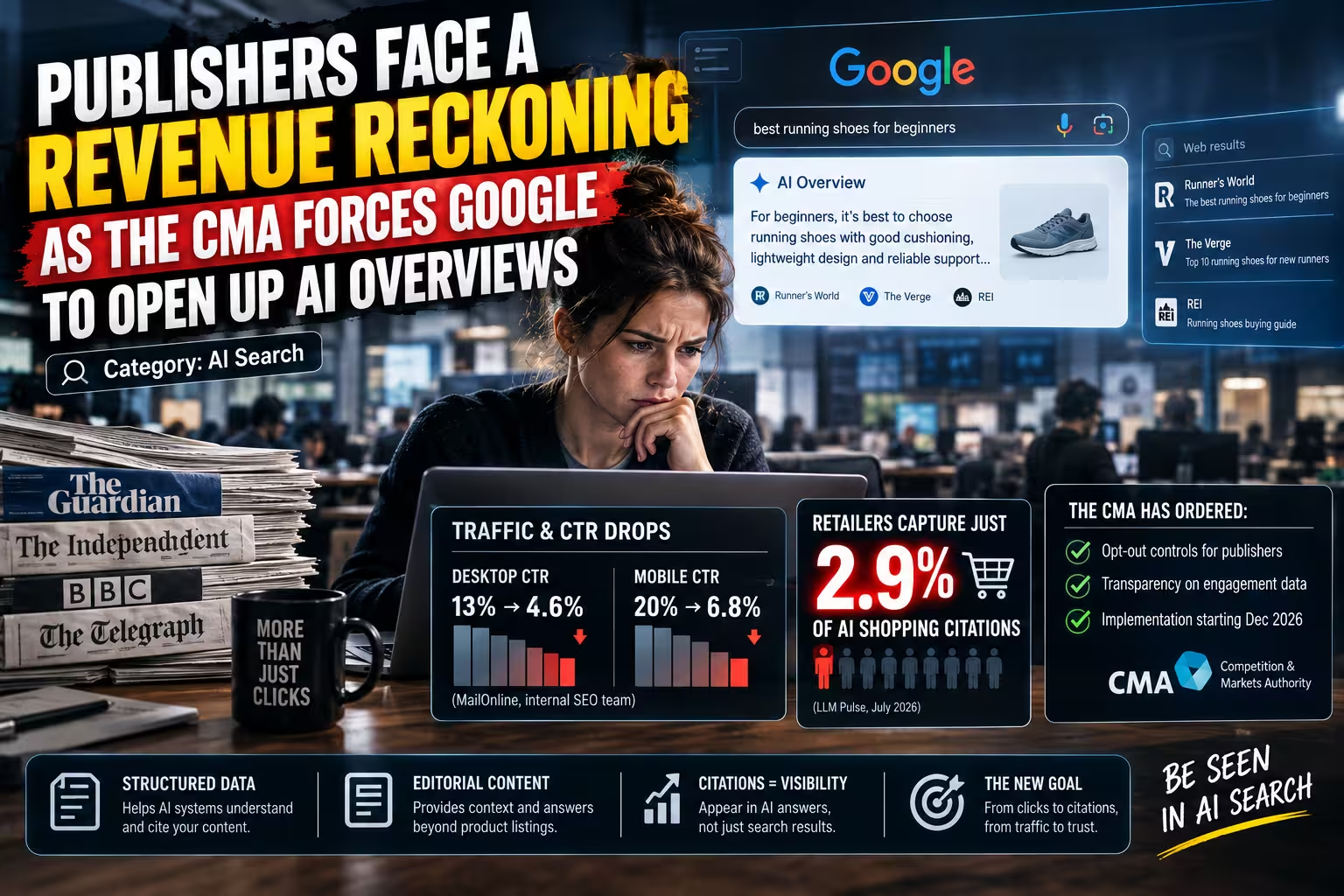
In AI Mode, the user rarely visits your website. You must provide the AI with “Snackable Truths.”
- The Summary Block: Start every long-form article with a 3-point bulleted summary. This makes it easy for the AI to “scrape and cite” your expertise without the user needing to click through.
- Direct Answers: Structure your headers as questions and your first sentence as a direct, factual answer. This “Answer Engine” format is exactly what Personal Intelligence looks for when assembling a response.
6. Focus on Spatial and Intent Data
If your brand has a physical presence, your Google Business Profile is more important than your homepage. The AI uses a user’s location history (from Maps) to determine relevance.
- Spatial Keywords: Optimise for “Near Me” in a contextual sense. If a user is at a gym, the AI should know your healthy café is the logical next step based on their past “Healthy Eating” search history.
Summary Checklist for 2026
- Switch to First-Person Content: Prioritise human expertise over AI-generated filler.
- Audit your Emails: Ensure every communication is machine-readable.
- Update your Schema: Implement Agentic and Action-based tags.
- Visual Clarity: Make your products recognisable to Google Lens and Photos.
The goal of SEO in 2026 is no longer to rank #1—it is to become the Verified Choice in a user’s private, AI-driven world.