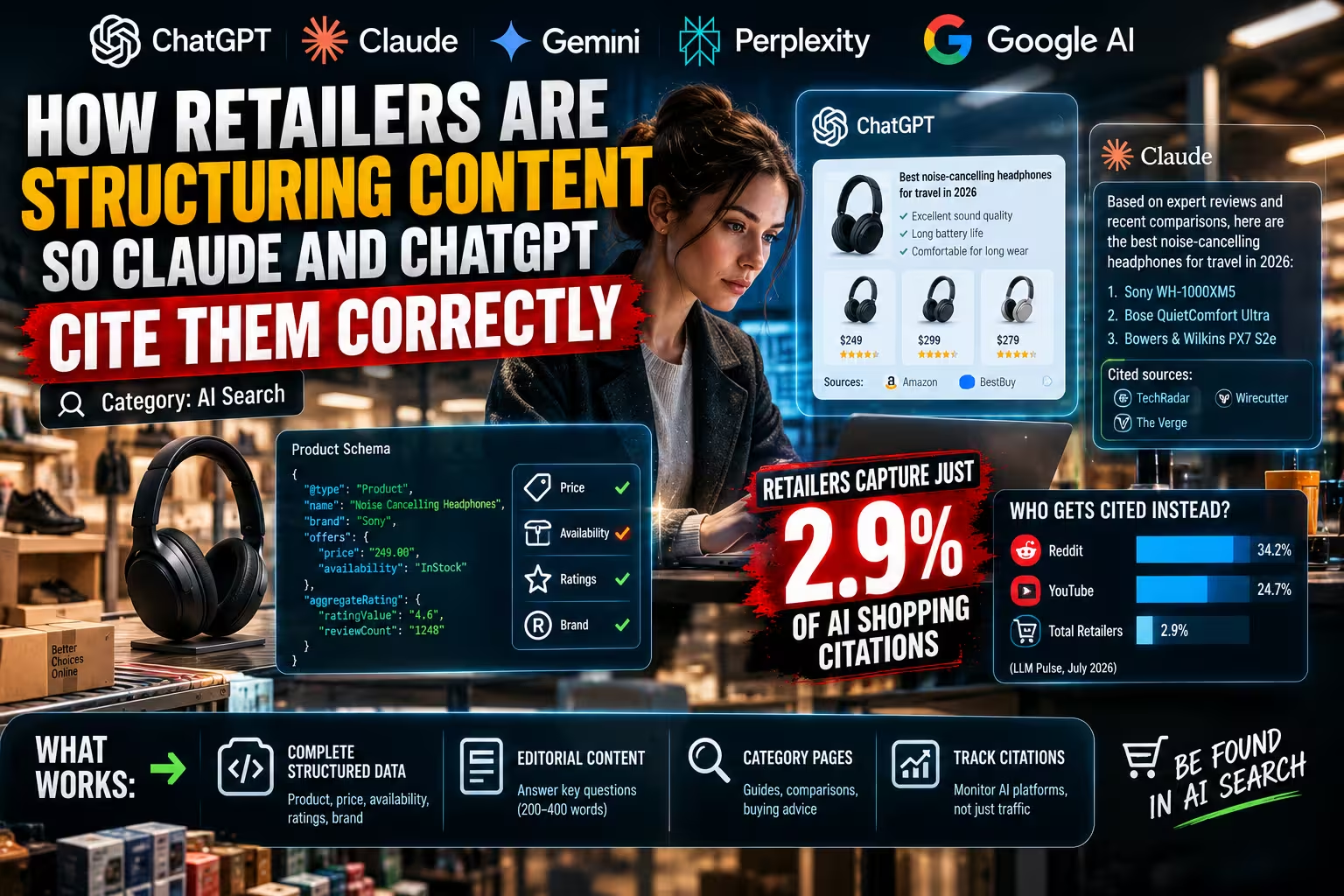

Retailers as a category currently capture just 2.9% of citations across non-branded shopping questions put to ChatGPT, Perplexity, Gemini and Google’s AI features, with Reddit and YouTube out-citing every major retailer combined (LLM Pulse, July 2026). For any retailer investing in AI search visibility, that figure is the starting point for understanding why structure, not just content volume, decides who gets cited correctly and who gets skipped.
This article sets out what the retailers who do get cited consistently are doing differently, and why structured product data is now functioning as a ranking input rather than a decorative extra.
Why Structured Data Now Decides Visibility
AI Overviews now appear on close to half of retail informational queries in major markets, and missing structured data fields, availability, price, aggregate ratings, functions as a silent demotion rather than a minor gap (Semrush, Q1 2026). AI systems pull directly from schema markup to construct answers, which means a product page without complete, accurate structured data is effectively invisible to the citation process regardless of how good the written content is.
The fields that matter most are the ones an AI system needs to answer a transactional question confidently, is this in stock, what does it cost, is it well reviewed. A retailer with rich brand storytelling but a stale price field or missing availability data is handing an AI system exactly the kind of gap that makes it choose a less interesting but more verifiable competitor instead.
What Category Pages Need That Product Grids Do Not Provide
A grid of products with no surrounding text gives an AI system nothing to cite as an answer to a question. Retailers seeing consistent citation success are adding genuine editorial content, roughly 200 to 400 words above the product grid, addressing sizing, buying guidance or brand comparisons, and citing credible sources within that copy rather than relying on the product listings alone to carry the page’s authority.
That editorial layer also gives AI systems a coherent block of text to summarise, which matters because citation engines tend to favour pages that clearly answer a specific question over pages built purely as product listings. A category page that opens with a genuine answer to “what should I look for in a stand mixer” before the grid begins is functioning as both a shopping aid and a citable source, which a bare product grid cannot do on its own.
Why Generative Traffic Is Growing Even as Overall Share Stays Small
Generative engines are driving between 8% and 14% of qualified e-commerce traffic on tracked retailers, up from under 2% in early 2025, even though retailers as a whole still capture a small share of total citations. That combination, small overall share but fast growth, is exactly the pattern that rewards retailers who fix their structured data now rather than waiting for the channel to mature before investing in it.
What Is Being Said About Retail AI Visibility Right Now
Industry discussion has increasingly focused on the gap between retailers’ assumption that scale alone guarantees citation and the reality that AI systems reward structured, well sourced content regardless of brand size. Which specific AI engine a shopper uses matters too, since citation behaviour varies significantly between ChatGPT, Perplexity and Gemini, meaning a retailer optimised for one engine’s citation patterns cannot assume the same structure performs equally well across all of them.
Retailers Capture Just 2.9% of AI Shopping Citations Overall
Geoff Parker of Blue Ocean Media says the retailers getting this right treat structured data as a content discipline, not a technical afterthought. “The retailers seeing citation growth are the ones auditing every product field the same way they audit their written copy,” Parker says. “A retailer with brilliant editorial content but incomplete schema is still going to lose out to a competitor with plainer writing and complete structured data, because the AI simply cannot cite what it cannot verify.”
For retailers assessing their own citation performance, the practical starting point is auditing structured data completeness against the specific fields AI systems are known to rely on, price, availability and ratings chief among them, before investing further in the editorial content built around it.