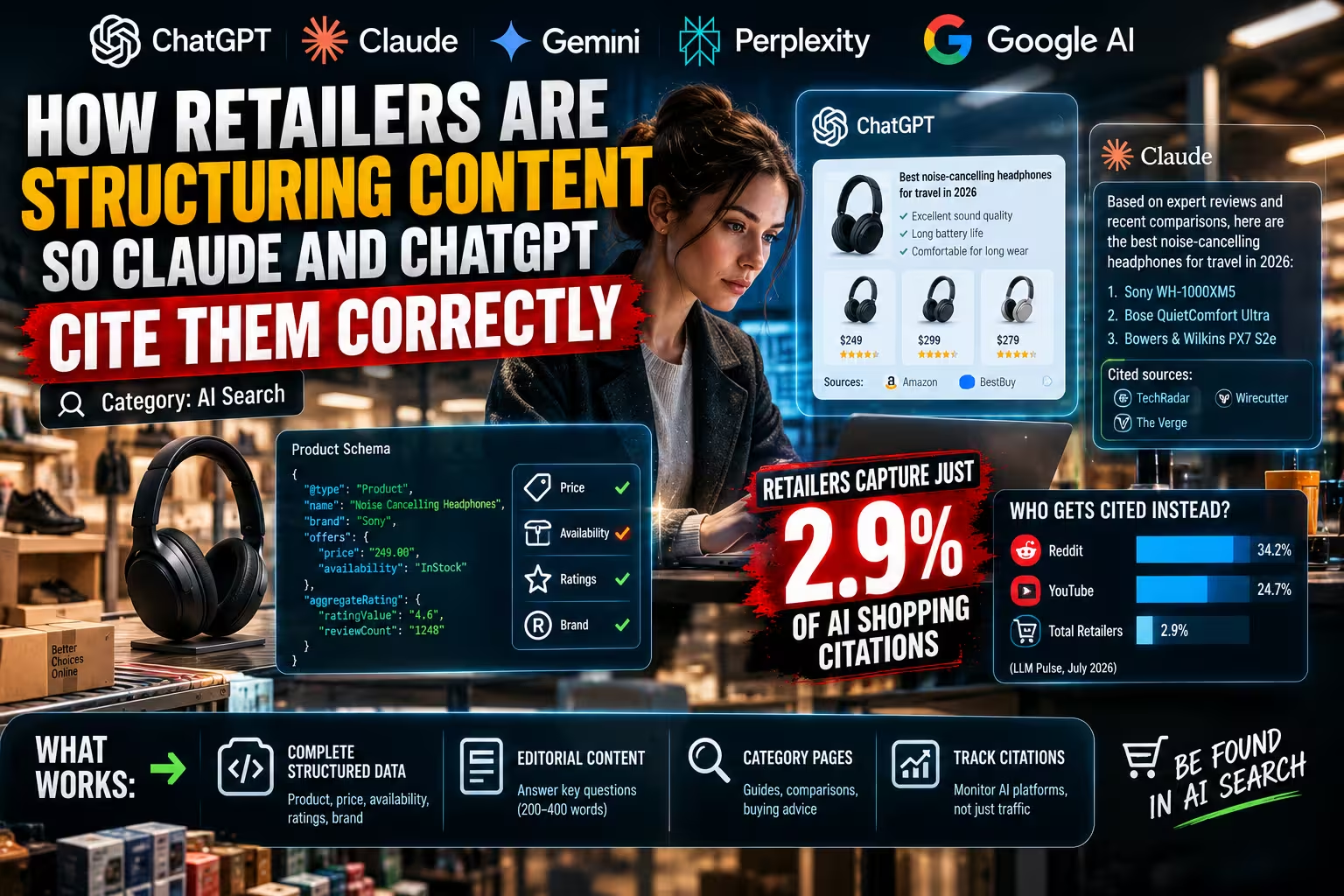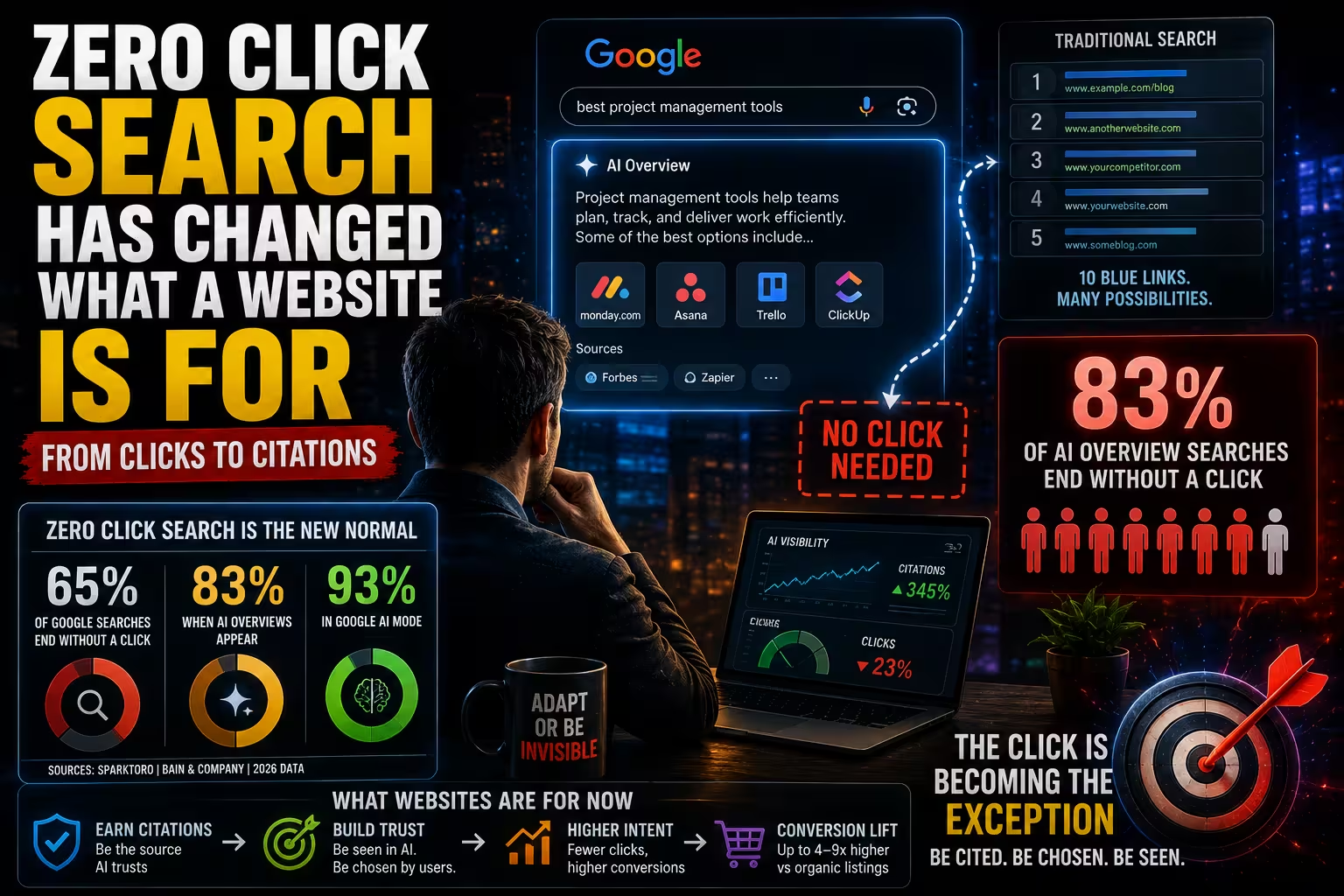

The number that should concern every marketing team in 2026 is not a traffic figure or a conversion rate. It is a visibility figure: 73% of B2B websites experienced significant traffic losses between 2024 and 2025, and across the same period, 73% of marketers lack the tools to even monitor their presence in AI search results. The two figures share the same number by coincidence, but they describe the same problem from two angles. Businesses are losing visibility to AI search engines, and most of them are not watching it happen.
The mechanism is structural, not algorithmic. Traditional search returns ten blue links. AI search returns one to three synthesised citations. There is no page two. A business that ranked fourth on Google for a competitive keyword was still visible to users who scrolled. A business that is not among the two or three sources an AI model cites when answering the same question is invisible entirely. The shift from ten results to three citations has not been incremental. It has been categorical.
The scale of that invisibility is documented across multiple independent studies. SOCi’s 2026 Local Visibility Index, which audited over 350,000 business locations across 2,751 brands, found that ChatGPT recommends just 1.2% of all local business locations. The MaximusLabs benchmark analysis of 200 B2B SaaS and AI companies found that 89% failed to meet the baseline structural requirements for consistent citation in AI-generated answers. LLM Listed’s UK-specific research, published June 2026, found that 87% of UK businesses are invisible in AI search results entirely.
What Traditional Search Rankings Cannot Tell You
The most dangerous assumption in digital marketing right now is that Google page one position predicts AI citation. It does not. Research by Omni Eclipse, which manually queried ChatGPT across 1,700 verified businesses in 32 industries between January and March 2026, found that 77% of businesses ranking on Google page one are invisible in ChatGPT. The signals that earn a Google ranking and the signals that earn an AI citation are related but not equivalent. Google weights backlink authority, keyword relevance, and domain age. AI citation selection weights entity clarity, factual consistency across the web, structured data that AI systems can parse efficiently, content freshness, and external consensus from independent sources.
A brand with strong PageRank but inconsistent information across third-party sources, thin schema markup, and content last updated in 2023 may rank well on Google and still be invisible to AI. The measurement infrastructure that most marketing teams have built, Google Search Console, Analytics, rank tracking tools, does not tell them whether they are being cited in AI answers at all. Only 14% of marketers currently monitor their AI citation presence. That means 86% of marketing teams are optimising for a surface they can measure while becoming invisible on a surface they cannot.
Most Marketers Are Flying Blind
The AI visibility crisis has a practical starting point. Before any GEO strategy can be built, a business needs to know where it currently stands in AI answers to the questions its buyers are actually asking. Testing how a brand appears across ChatGPT, Claude, Perplexity, and Google AI Mode for the five to ten buyer-stage questions most relevant to its category takes less than an hour and produces a baseline that no existing analytics tool provides. Most businesses that do this test discover they are not appearing at all. That discovery is uncomfortable, but it is the only honest starting point for closing the gap between where a brand ranks and where it is actually found.
Sources
- ZipTie, Platforms Losing Visibility Due to AI: The Data, the Diagnosis, and the Recovery Playbook, April 2026
- MaximusLabs, The AI Visibility Gap: 2026 GEO and AEO Benchmark Report, May 2026
- Omni Eclipse, The 2026 AI Search Visibility Report, March 2026
- Goodfirms, AI SEO Statistics 2026, June 2026
- Superlines, AI Search Statistics 2026: 60+ Data Points, March 2026
- Digit.fyi, Report: 87% of UK Businesses Invisible in AI Search Results, June 2026